Adjunct
1. Definition:
“Phụ từ” are words that go with verbs and adjectives to express the grammatical meaning, manner, degree or result of an action or activity.
“Phó từ” can be translated as “Adjunct**” in English.
2. Types of Adjunct:
2.1 Phụ từ chỉ thời gian (Adjunct of time) :đã, đang, sẽ, sắp,…**
| Vietnamese | English | Example |
|---|---|---|
| …đã… | for past tense | Anh ấy đã học tiếng Việt hai năm** (He studied Vietnamese for 2 years) |
| …đang…. | present continuous | Tôi đang đọc sách (I am reading book) |
| …sẽ… | future tense | Bà ấy sẽ về nước vào tháng sau (She will return her country next month) |
| …sắp…. | near future | Trời sắp mưa! (It is about to rain) |
| ….vừa/ mới… | present perfect | Ông ấy vừa mua một cái điện thoại mới (He has just bought a new phone) |
| …..từng….. | used to | Cô ấy từngsống ở đây (She used tolive here) |
| …….rồi | already | Anh ấy ngủ rồi! (He slept already) |
2.2. Phụ từ chỉ sự tiếp diễn (Adjunct of unity): vẫn, cũng, còn, cứ, lại,…
| Vietnamese | English | Example |
|---|---|---|
| …vẫn……còn…** | still | Anh ấy (vẫn) cònthức? (He is still awake) |
| …đang…. | present continious | Chúng ta đang họctiếng Việt. (We are studyingVietnamese) |
| V+ mãi | Ongoing, persistent, and seemingly unwilling to stop | Tôi mệt rồi mà nó vẫn nói mãi (I’m tired but he still keeps talking) |
| ….cứ… | A word affirming an activity or state that persists unconditionally. | Anh cứ làm theo kế hoạch ban đầu (You just follow the original plan) |
| …..hoài. | indicates the action never stops, never ends | Trời mưa hoài, biết bao giờ mới tạnh. (It keeps raining, I don’t know when it will stop.) |
| ….lại…. | A word indicating the repetitive or continuous nature of an activity or phenomenon. | Chị ấy lại đến trễ (She came late again) |
2.3. Phụ từ chỉ tần suất (Adjunct of frequency): luôn, thường, đôi khi, thỉnh thoảng,…
Example:
| Vietnamese | English | Example |
|---|---|---|
| …luôn… | always | Ông ấy luôn thức dậy lúc sáu giờ sáng (He always wakes up at 6am) |
| ….thường….….hay….** | usually | Cô ấy thường đi ngủ lúc mười giờ tối (She usually goes to sleep at 10pm) Tôi hay đi ngủ trễ (I usually go to sleep late) |
| thỉnh thoảng/đôi khi** | sometimes | Thỉnh thoảng, anh ấy đi tập gym (Sometimes, he goes to gym) Đôi khi, chị ấy đi du lịch với gia đình (Sometimes, she goes traveling with family) |
| lâu lâu | once in a while | Lâu lâu, anh ấy đi làm trễ (Once in a while, he goes to work late) |
| ít khi/ hiếm khi | rarely | Họ ít khi đọc sách (They rarely read books) |
| never | chưa bao giờ | Tôi chưa bao giờđi Mỹ (I have never been the US yet) |
| never ever | không bao giờ | Chúng tôi sẽ không bao giờ ăn thịt chó (We will never ever eat dog meat) |
2.4 Phó từ chỉ sự phủ định (Adjunct of negative): không, chưa, chẳng, đâu,…
| Vietnamese | English | Example |
|---|---|---|
| …không… | to negate an action or phenomenon being talked about | Tôi không thích uống cà phê (I don’t like to drink coffee) |
| …chưa… | Nó chưa ăn trưa (He has not had lunch yet) | |
| …chẳng… | Tôi chẳng hiểu anh ấy nghĩ gì (I don’t understand what he is thinking) | |
| …đâu (có)…. | Ông ấy đâu có ở nhà (He is not at home) | |
| …không…đâu.(more emphasis on negation) | Chị ấy không nghe đâu.(She wouldn’t listen) |
2.5. Phụ từ chỉ mức độ (Adjunct of level) : rất, lắm, quá, hơi,…
– Distinguish “rất, lắm, quᔶ
Rất:
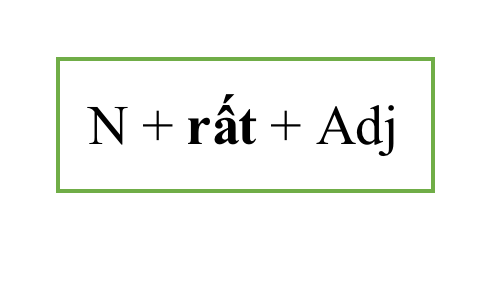
+ Use: “Rất” is used when describing an object in formal contexts, commonly found in written language or textbooks.
+ Grammar:
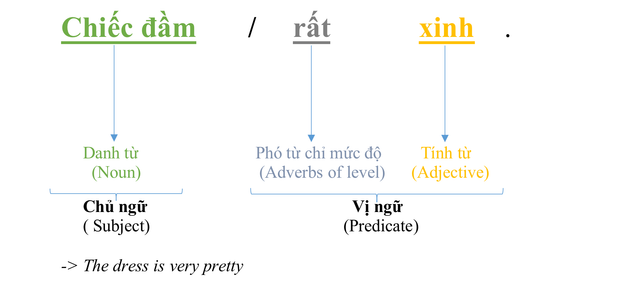
+ Example:
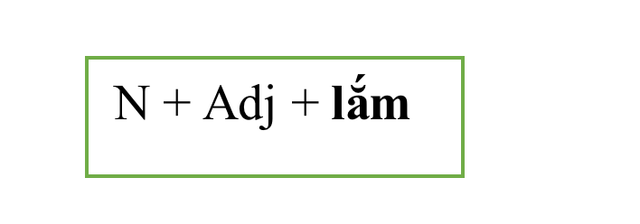
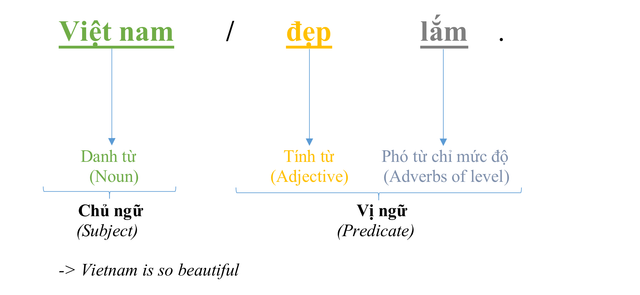
Lắm:
+ Use: as “So” in English. “Lắm” is used to describe something that the subject has personally experienced and wishes to recommend to the listener, making it more persuasive.
+ Grammar:
+ Example:
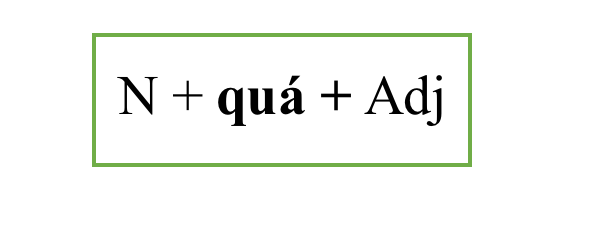
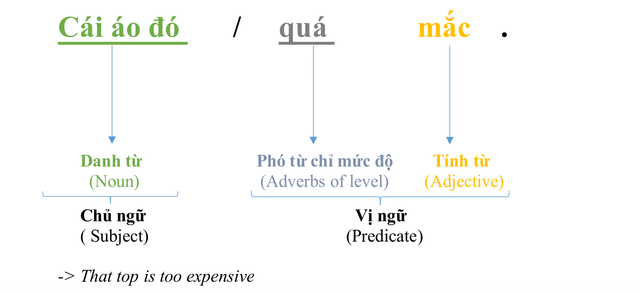
Quá + Adj:
+ Use: “Quá” is used to a degree that exceeds permissible limits.
+ Grammar:
+ Example:
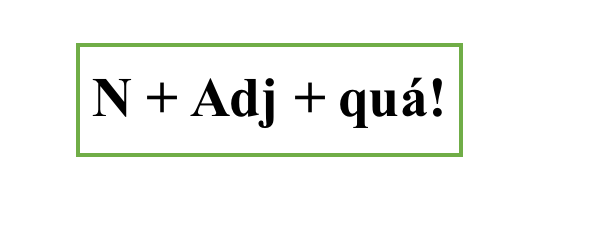
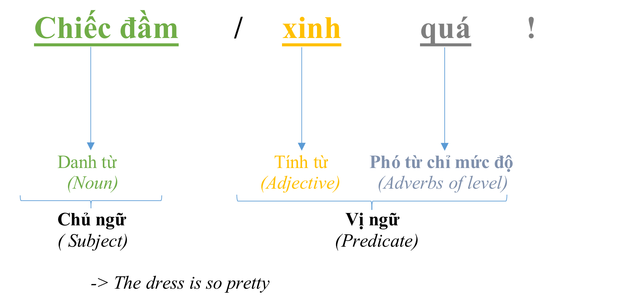
Adj + Quá:
+ Use: “Quá” To a degree significantly higher than normal, often expressing a high level of exclamation, and typically expressed spontaneously at the moment of speaking.
+ Grammar:
+ Example:
| rất | lắm | quá + Adj | quá + Adj | |
|---|---|---|---|---|
| Use | as “very” , more formal, in text book | as “so” , more persuasive. | as “too”, to a degree that exceeds permissible limits | To a degree much higher than normal, often expressed with exclamation and spontaneously. |
| Grammar | N + rất + Adj | N + Adj + lắm | N + quá + Adj | N + Adj + quá ! |
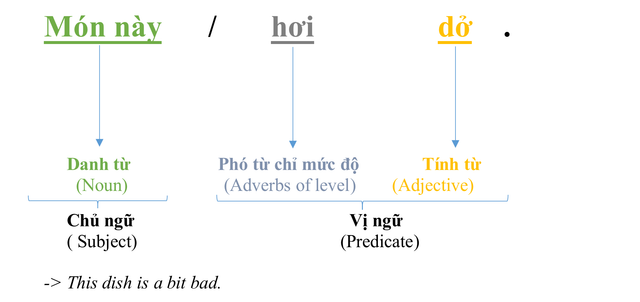
– Explain about “Hơi”:
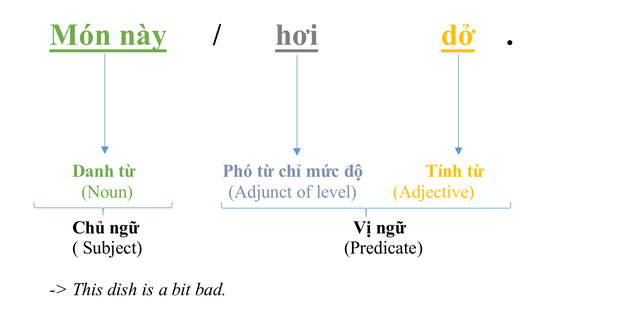
+ Use: Only a little, somewhat. Often used with negative adjectives to soften or downplay the severity of a situation or thing.
+ Grammar:

+ Example:
– Summary and example:
| Vietnamese | English | Example |
| ….rất… | very | Chiếc đầm đó rất đẹp (That dress is very beautiful) |
| …..lắm. | so | Món ăn ở nhà hàng này ngon lắm (This restaurant’s dishes are so delicious) |
| ..quá……quá….** | too | Anh ấy quá lười biếng (He is too lazy) Trời nóng quá! (It’s too hot) |
| …hơi… | a bit | Quần áo ở đây hơi mắc (Clothes here are a bit expensive) |
2.6. Phó từ cầu khiến (Adjunct of command: hãy, thôi, đừng, chớ, cứ,… )
| Vietnamese | English | Example |
|---|---|---|
| Hãy… | A word used to request, persuade, or encourage action or a specific attitude. | Hãygiữ im lặng! (Please keep quiet.) |
| …..thôi. | An expression showing reluctance to agree due to the lack of alternative opinions.** | Nghe thôi, đừng nói gì nữa. (Just listen, don’t say anything more.) |
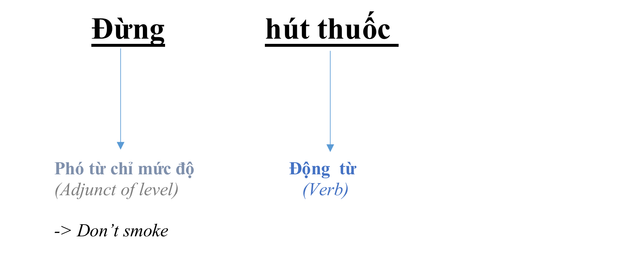
| Đừng…../Chớ…** | express advice, advise not to say or do something | Đừng hút thuốc ở đây! (Don’t smoke here) Chớ có làm mất đồ của tôi! (Don’t loose my things) |
| cứ | A word affirming an activity or state as definite, regardless of conditions. | Cứ làm theo những gì tôi nói.(Just do what I say) |
| Xin… | A word used to begin a request, conveying modesty and politeness. | Xinđừng làm phiền tôi lúc này. (Please don’t disturb me right now.) |
| …..đi. | word expressing command or suggestion, urging | Ngủ đi! Đừng dùng điện thoại nữa (Go to sleep! Don’t use phone anymore) |
2.7 Phó từ về khả năng (Adjunct of capacity): có thể, có lẽ, được,…
| Vietnamese | English | Example |
|---|---|---|
| …có thể…. | Can | Anh ấy có thể nói tiếng Việt giỏi (He can speak Vietnamese well) |
| …..được. | Em nói tiếng Anh được không? (Can you speak English?) | |
| Chắc là…. | May be | Chắc là tối nay ông ấy sẽ về nhà trễ (May be he will go home late tonight) |
| Chắc chắn…. | Surely | Chị ấy chắc chắn đã đến công ty hôm qua (She surely came to company yesteday) |
| Hầu như/Gần như/Phần lớn | Most of | Phần lớn người Việt đều chạy xe máy (Most of Vietnamese people ride motorbikes) |
| Có lẽ…. | probably | Có lẽ, chị ấy đang buồn (Probably she is sad) |
2.8. Phó từ chỉ sự đồng nhất (Adjunct of identity): mãi, nữa, còn, vẫn, lại, đều,….
| Vietnamese | English | Example |
|---|---|---|
| …cũng… | also | Tôi thích ăn bò bít- tết, chị ấy cũng thích ăn bò bít- tết (I like to eat beef steak, she also likes to eat beef steak.) |
| …đều… | all | Bốn người đó đềubiết nói tiếng Anh. (All four of them know how to speak English) |
| Tất cả…. | Tất cả nhân viên trong công ty đều là người Việt (All employees in the company are Vietnamese) | |
| Cả | whole | Cả gia đình anh ấy đều thích đi du lịch (His whole family likes to travel) |
| ….nhau | each other | Hai người thích nhau từ lâu (The two of them have liked each other for a long time) |
| …cùng… | together | Tôi và anh ấy sẽ cùng đi ăn vào tối mai (Me and him will go to eat together tomorrow night) |
3. Position of Adverbs in sentences
The position of “Phụ từ” in a sentence can vary depending on the type of adverb and its purpose.
Example: