Clothing - Fashion
1. Casual Accessories:
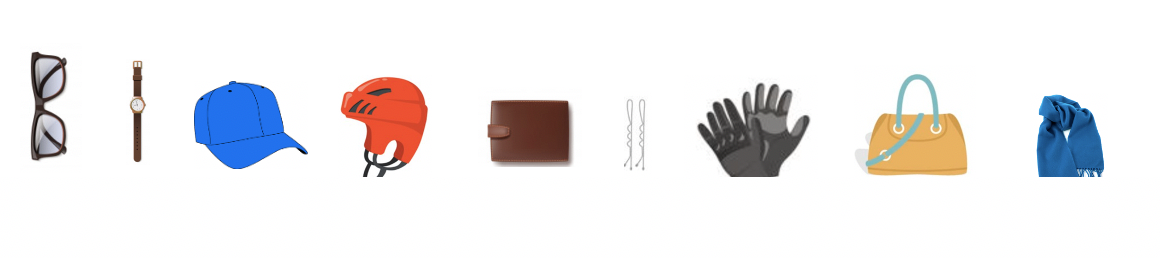
Vietnamese vocabulary is made up of single words, similar to that of English. The difference here, however, is in the rationale and method of thinking of English and Vietnamese language.
For example:
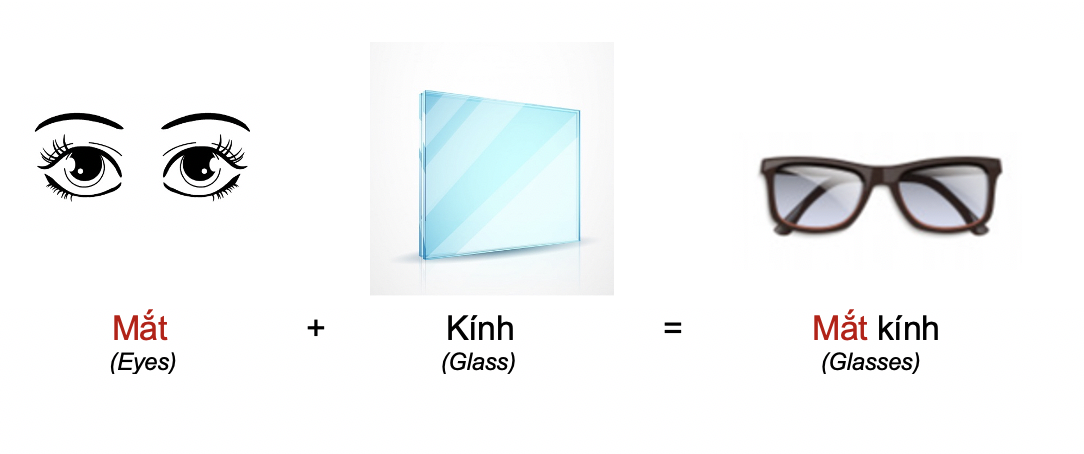
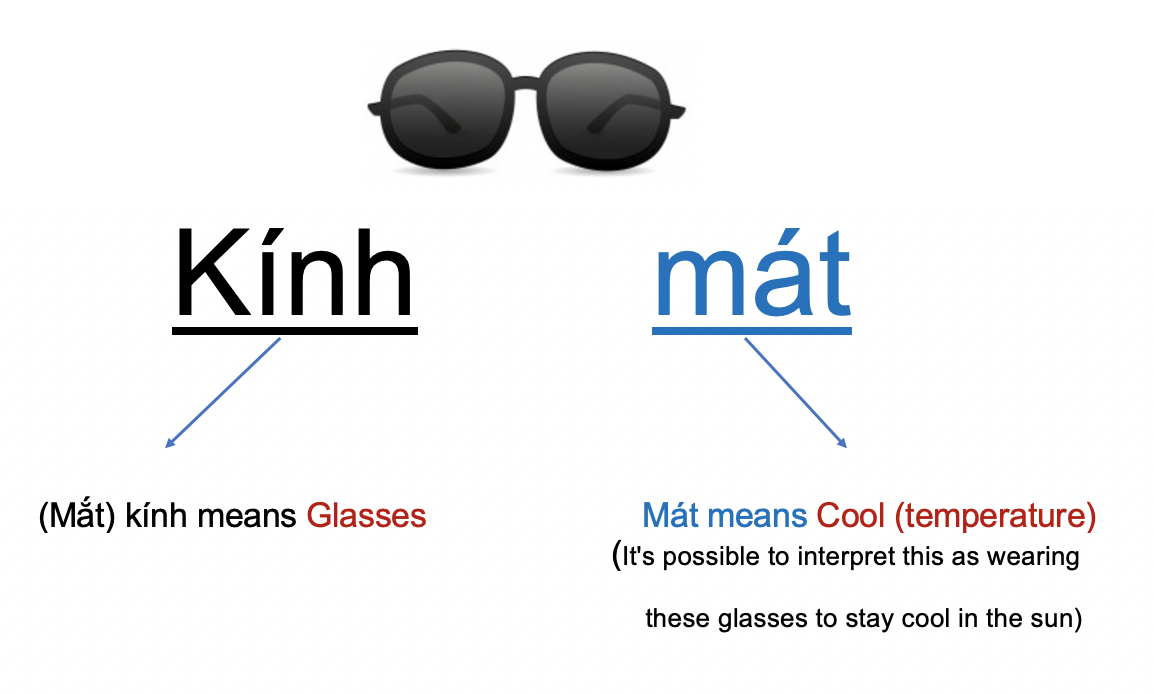
-> In this case, the Vietnamese believe that the glass used for eyes will be referred to as “MẮT KÍNH”- Glasses.
However, the letter MẮT KÍNH is solely used to refer to Glasses in general. There are two types of glasses worn by Vietnamese people:
Myopia Glasses:
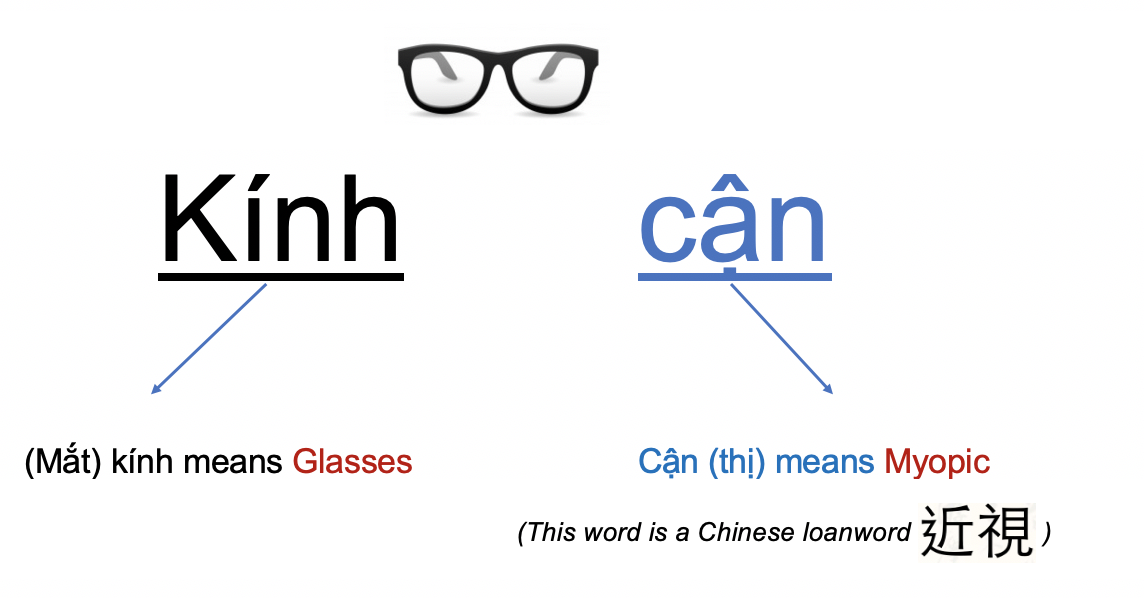
Sunglasses:
Wrist-watch:
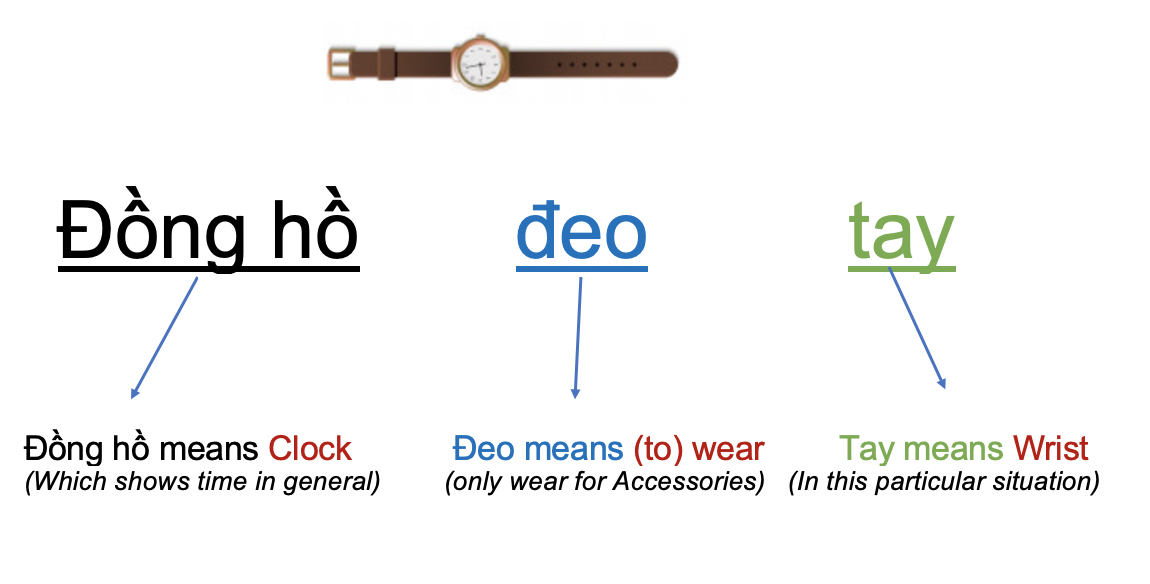
**Note:
-
Please keep in mind that ĐỒNG HỒ stands for CLOCK, which displays time in general, thus depending on the application, we may be able to reuse the combination for different objects (related to CLOCK) in the future.
-
Please keep in mind that TAY can refer to any bodily component relating to the ARM, WRIST, or HANDS.
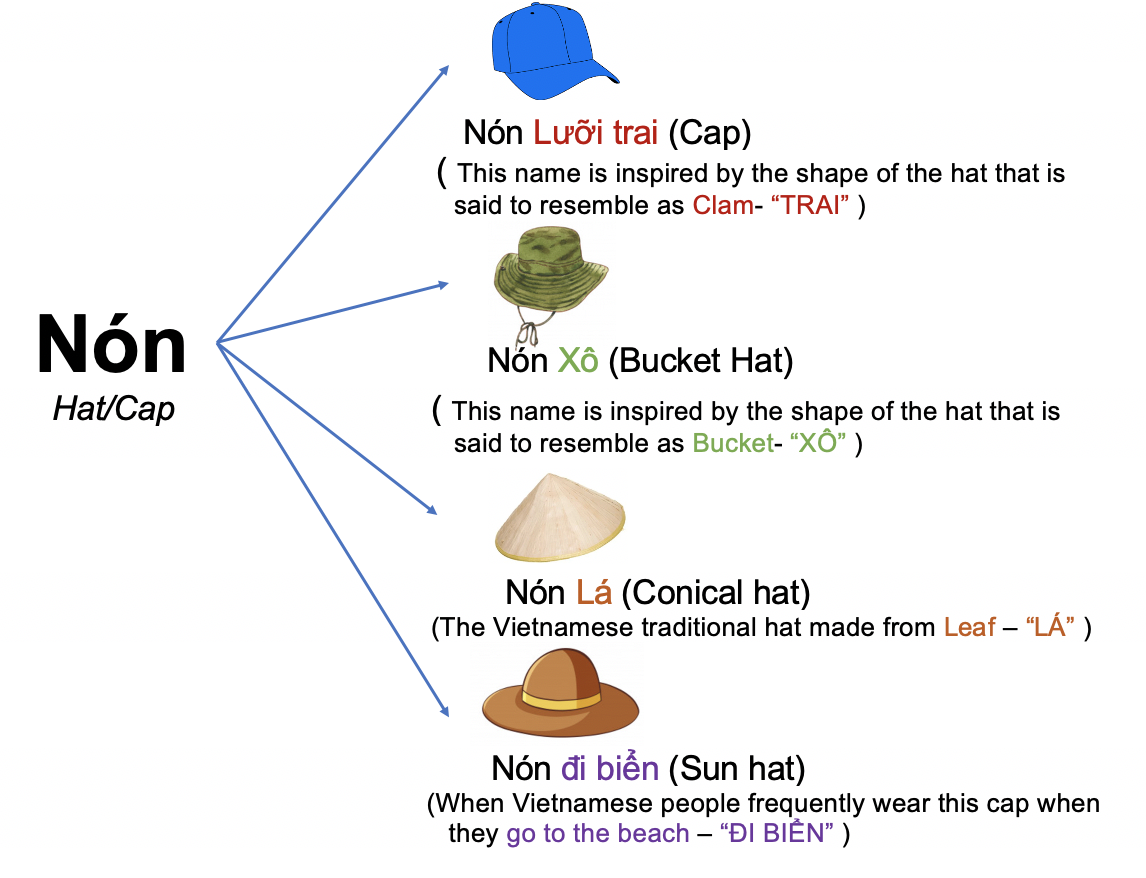
Hat/Cap: In general, any type of hat/cap is referred to as NÓN – Southern Vietnamese or MŨ – Northern Vietnamese.
The following is a list of common Vietnamese hats:
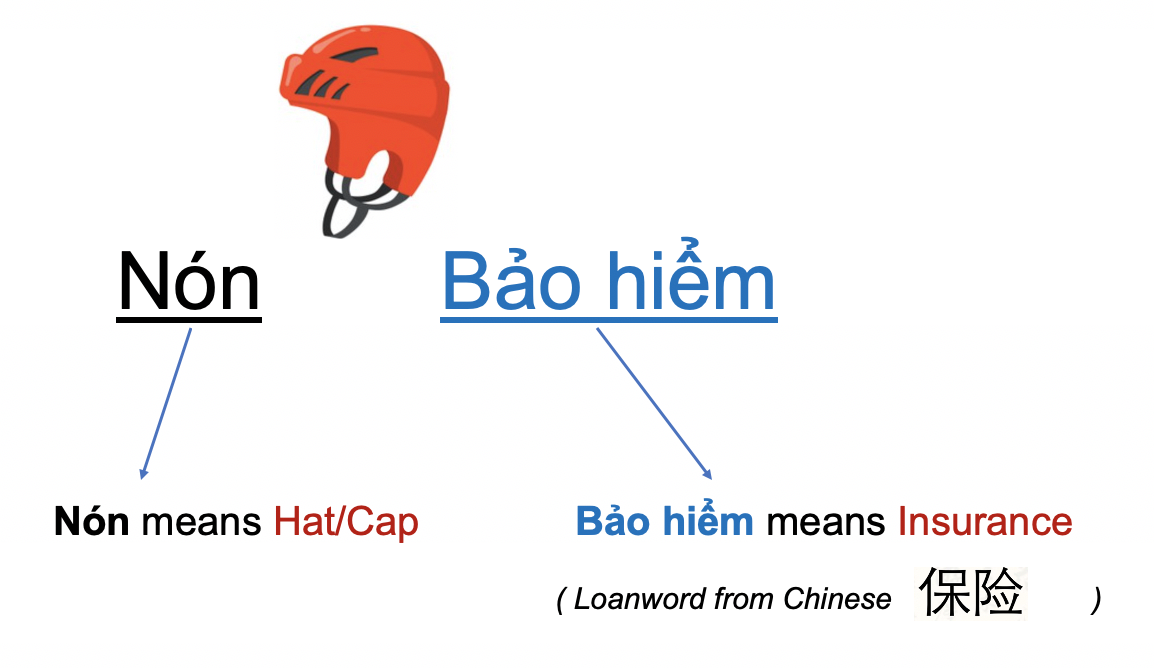
Beside that, we also have NÓN BẢO HIỂM which means HELMET:
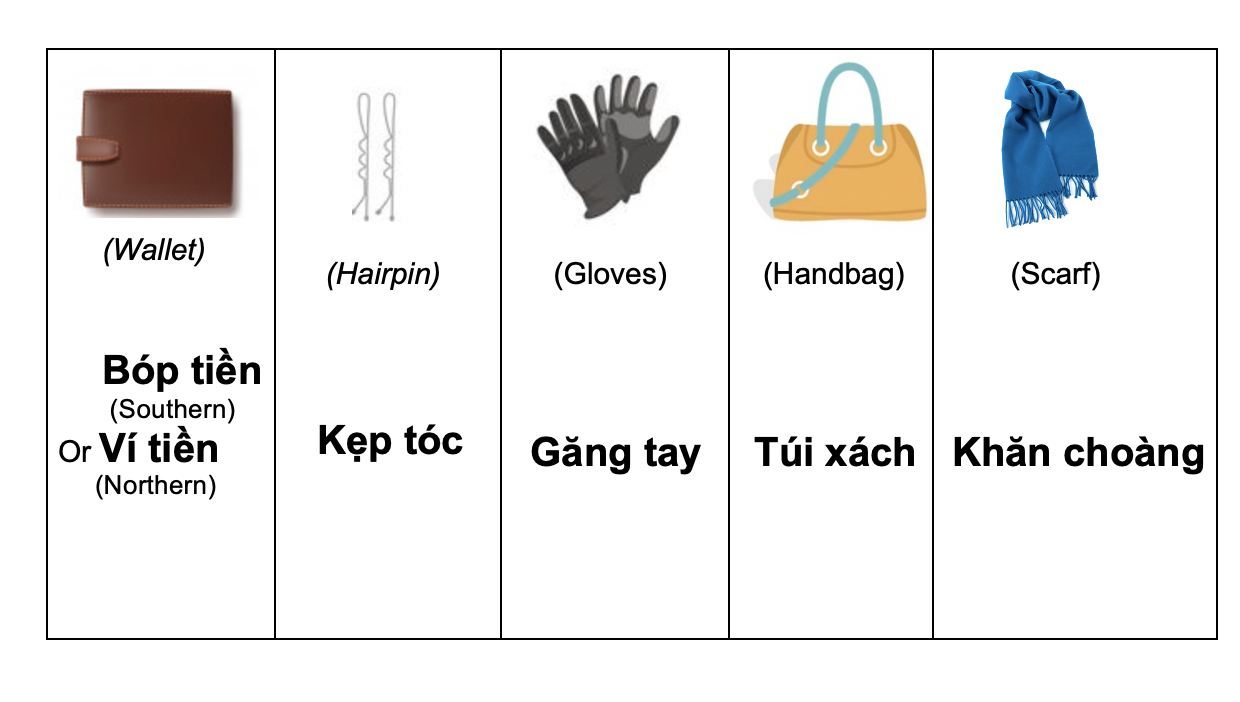
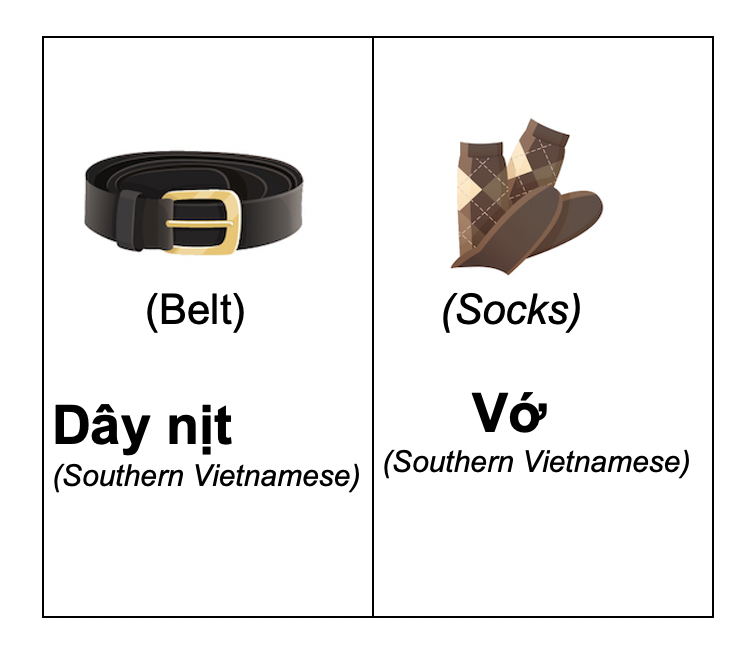
*NOTE: In Northern Vietnamese, Belt means THẮT LƯNG ; Socks means TẤT .
In addition, we have BA LÔ (loanword from French- old word during the war )
NOTE:
The word “ballot” comes from the French word “balle.”
“Balle” has a variety of meanings currently, all of which stem from the old Germanic term “ball,” which refers to a little round item and is derived from the Indo-European root “behl” (blow).
Until the 17th century, the term “balle” was used in French to refer to a bundle of items wrapped in fabric. (In English, “ballot” is now translated as “bundle.”) The term “ballot” refers to a little “balle,” or a little package that may be carried on one’s back, that was initially employed in the 15th century.
Later, the tiny balluchon was created from the term “ballot.”
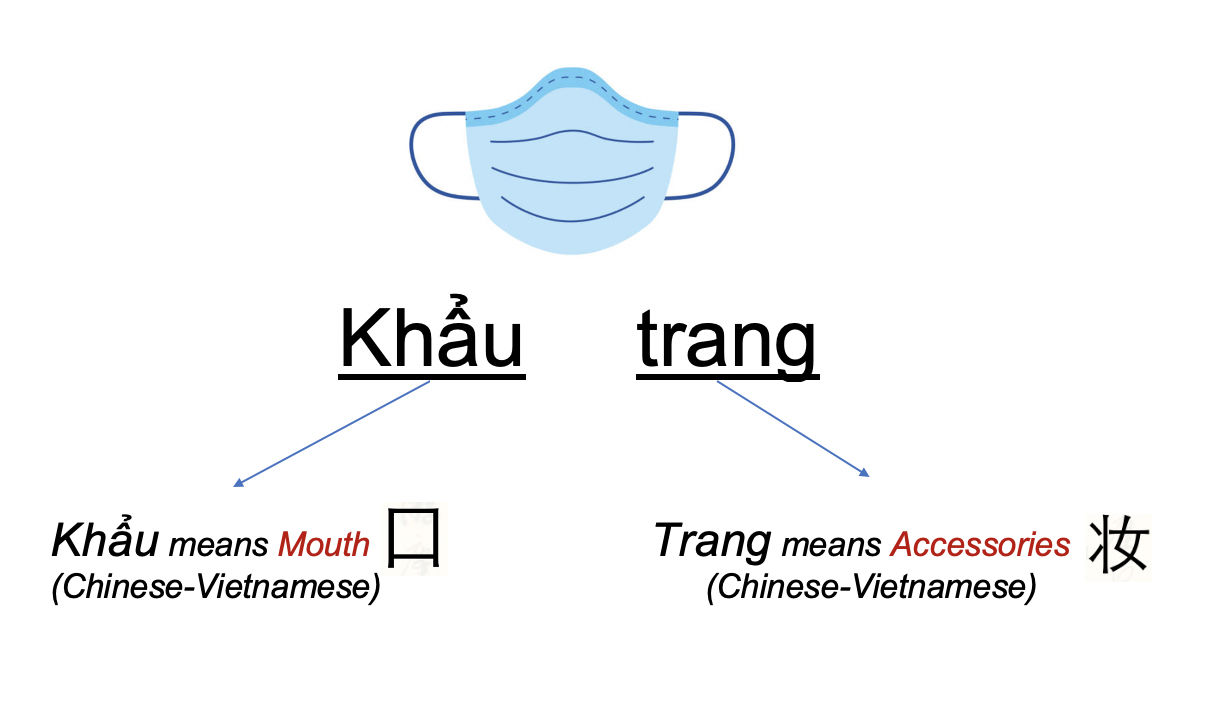
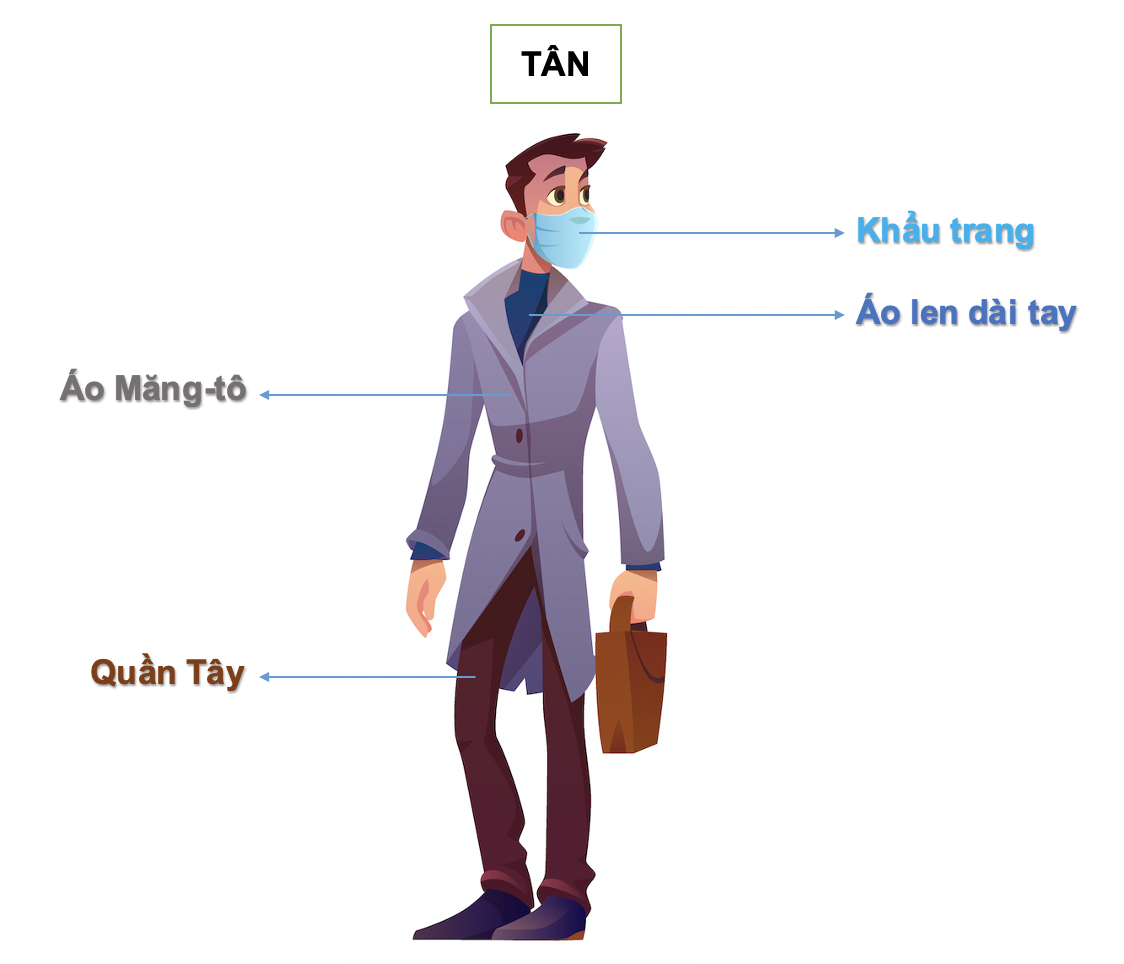
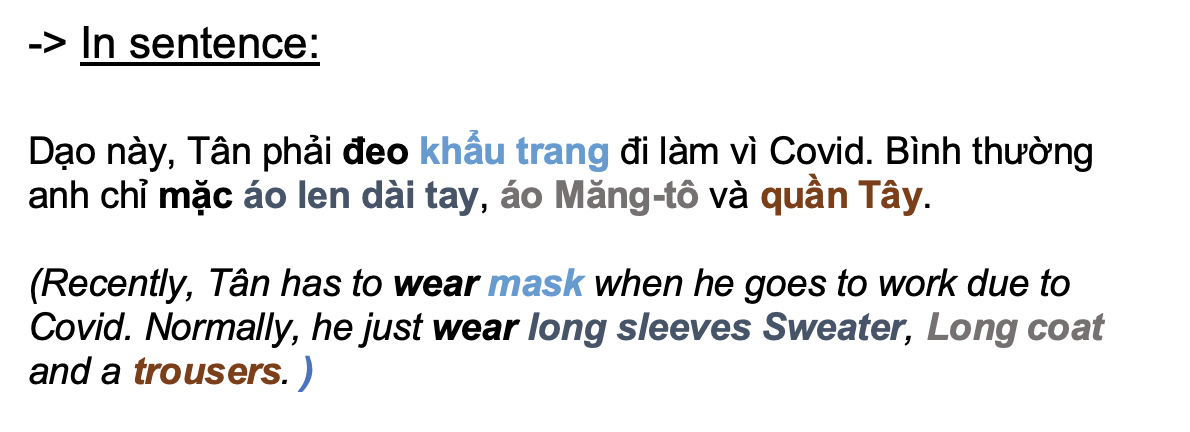
Beside, loanword from French, we also have KHẨU TRANG – MASK:
HOW TO APPLY THESE OBJECTS IN SENTENCE:
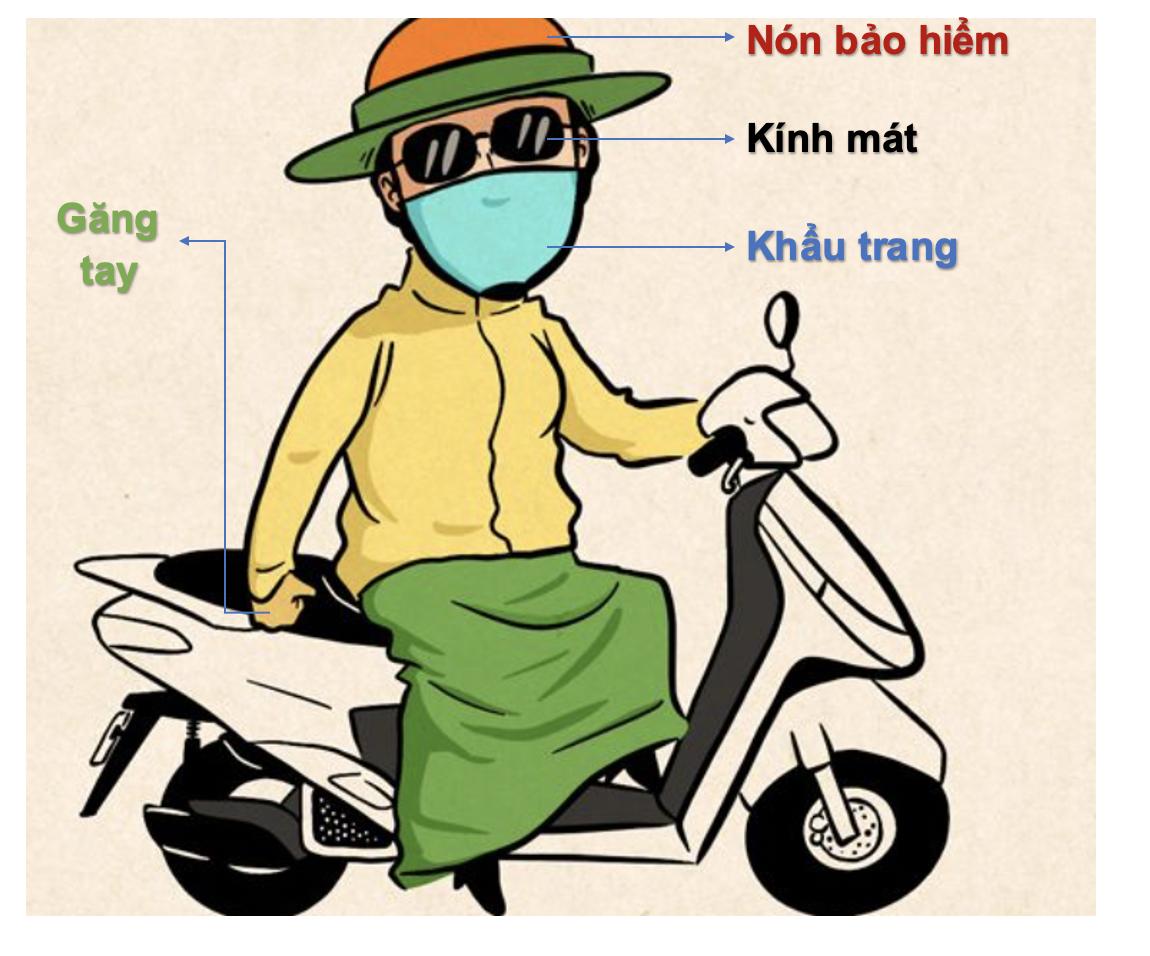
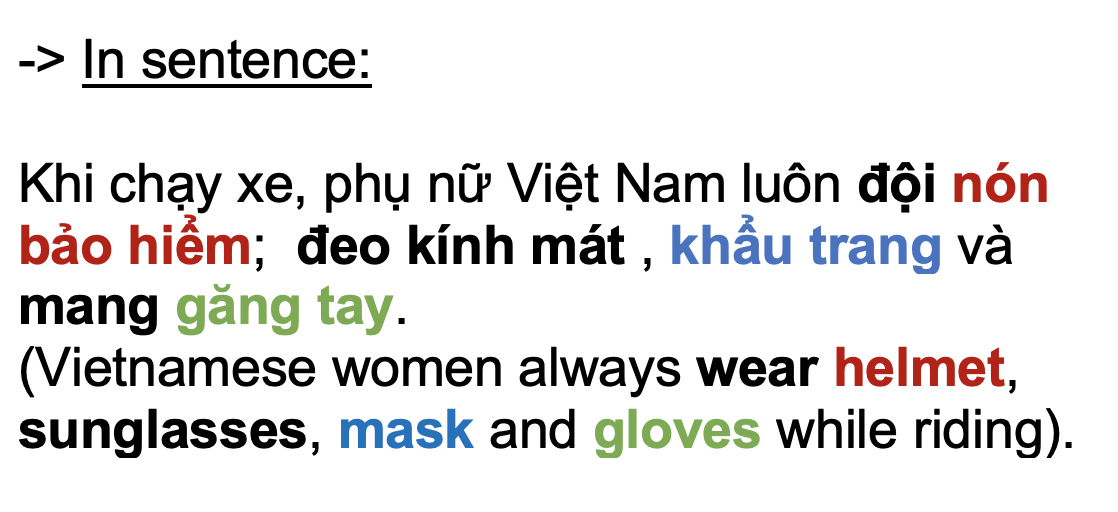
**NOTE:
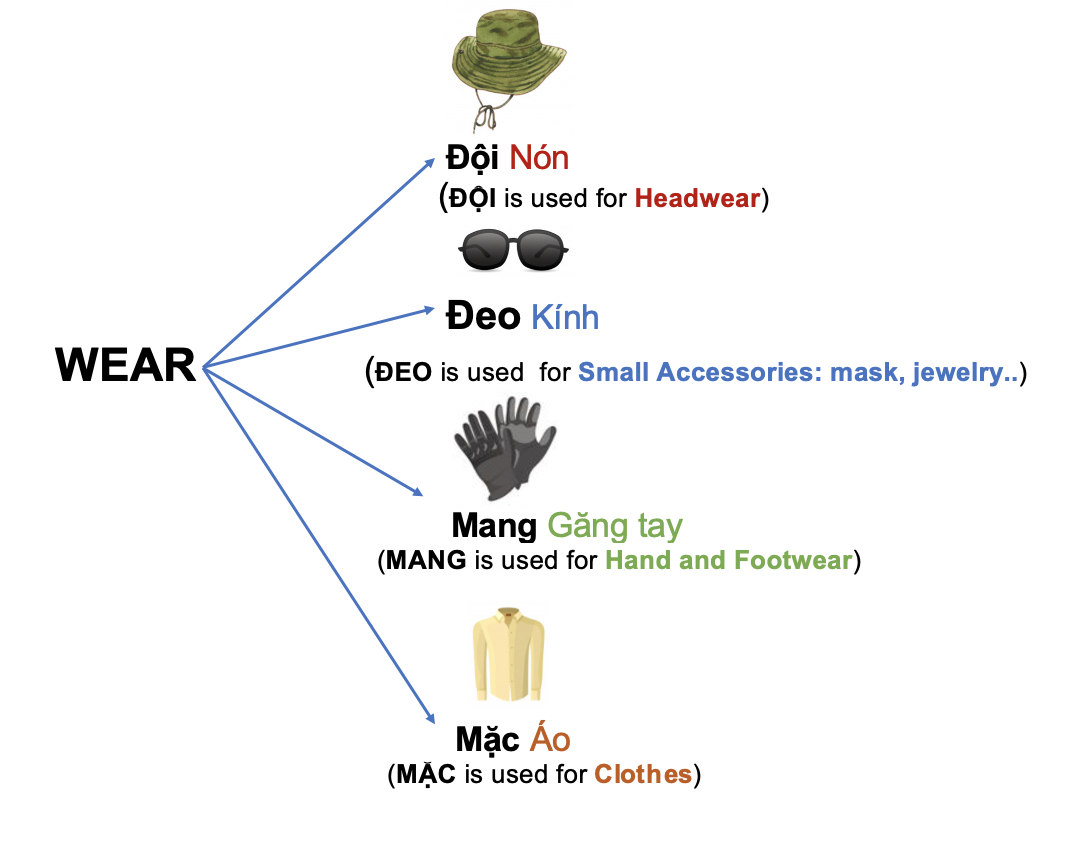
2. Work-related Accessories:
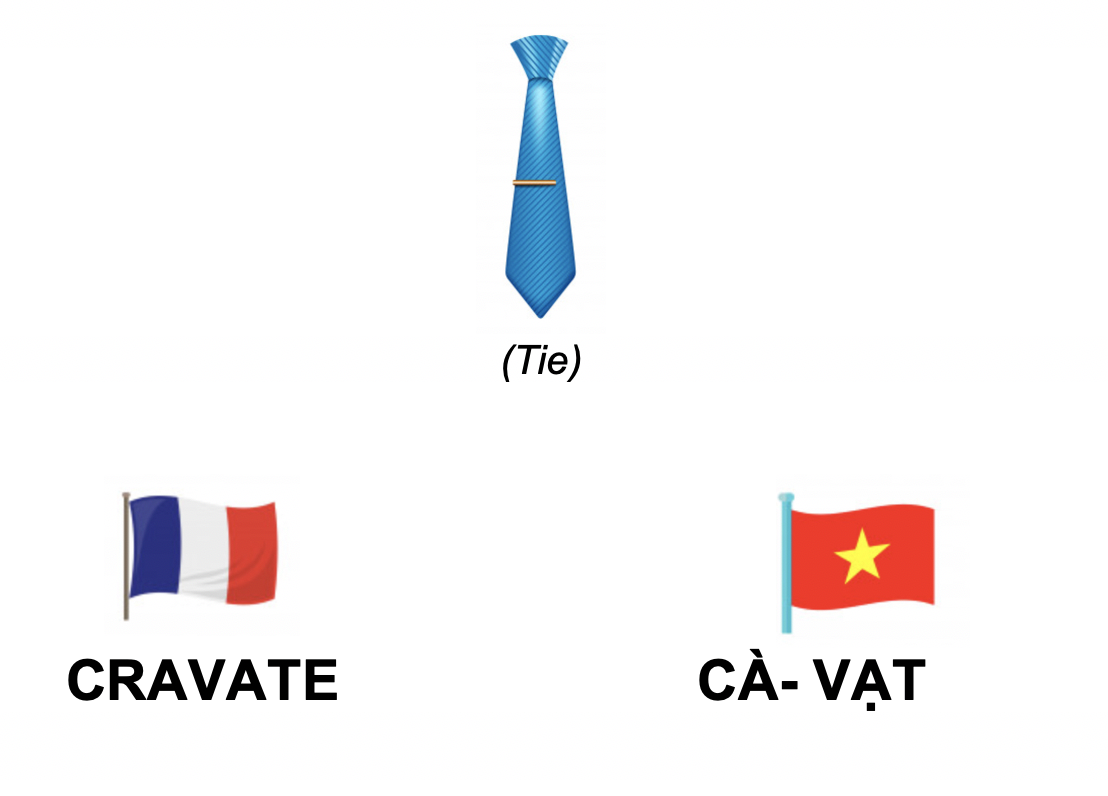
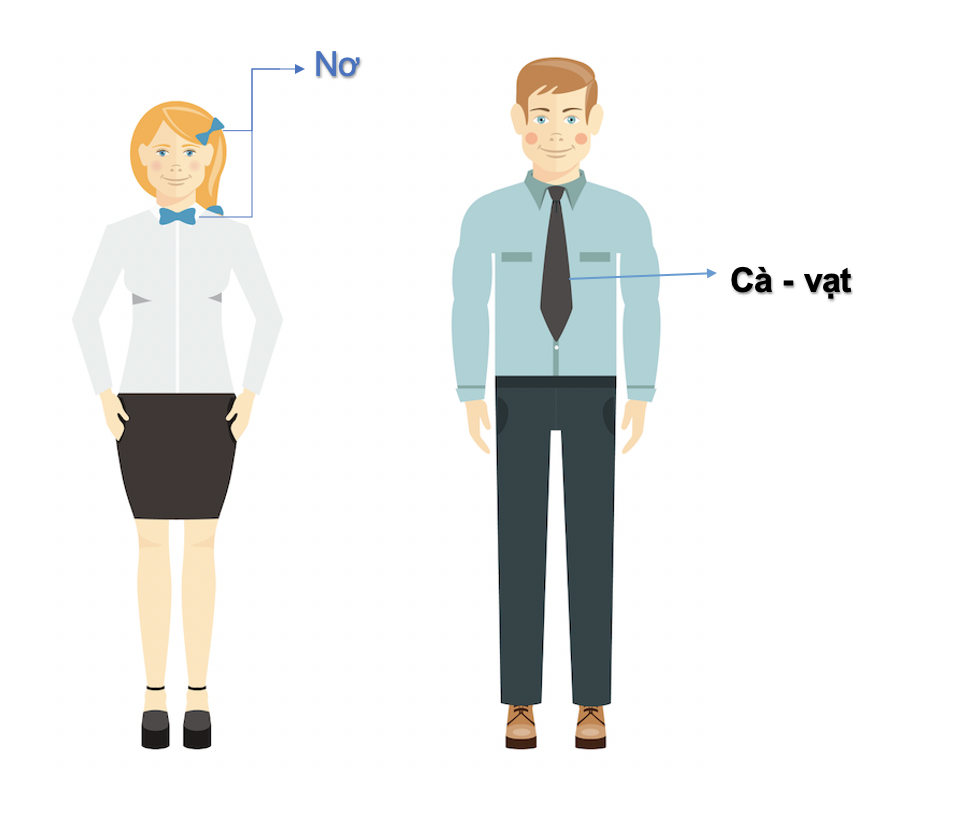
Tie: in Vietnamese means Cà vạt (loanword from French)
Bowtie:
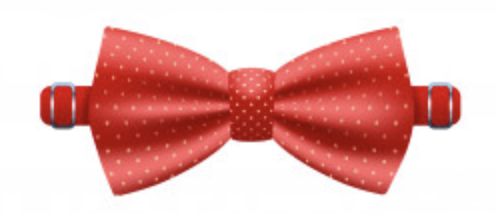
Cái nơ
Example:
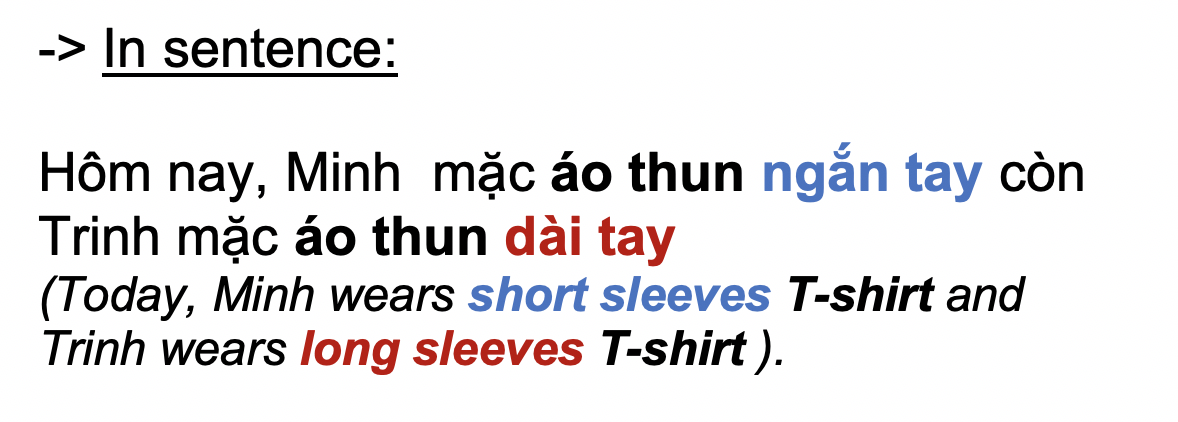
-> In sentence:
Khi đi làm, Mai thích thắt NƠ và Nam thích thắt CÀ – VẠT.
(Mai prefers to wear a bow tie to work, while Nam prefers to wear a tie.)
NOTE: Thắt means **WEAR (particular for Nơ- Bow tie and Cà- vạt – Tie)
3. Jewelry:

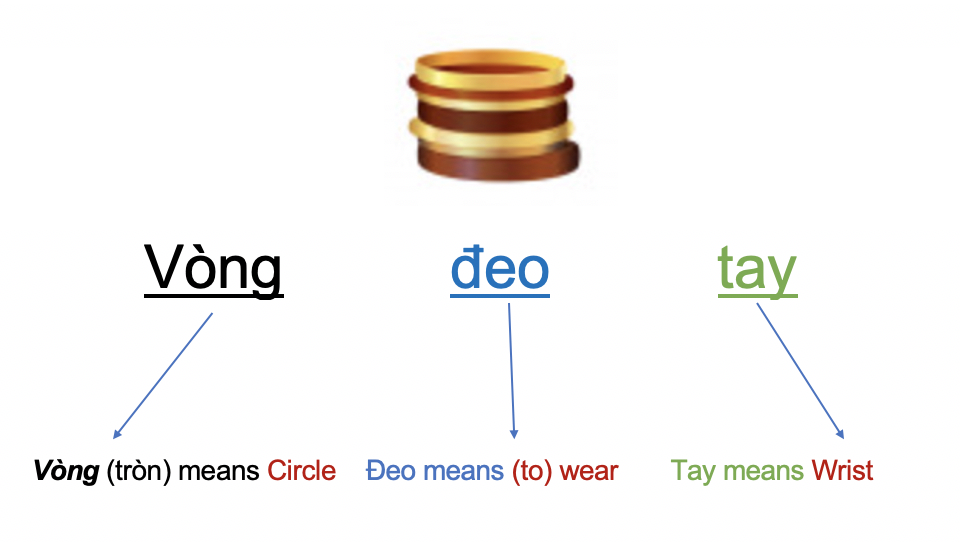
Bangle:
The Vietnamese name objects based on their shape; Bangle can be strong, thin, or huge, and are not only round but also hard. They are commonly constructed in a solid block.
Necklace:
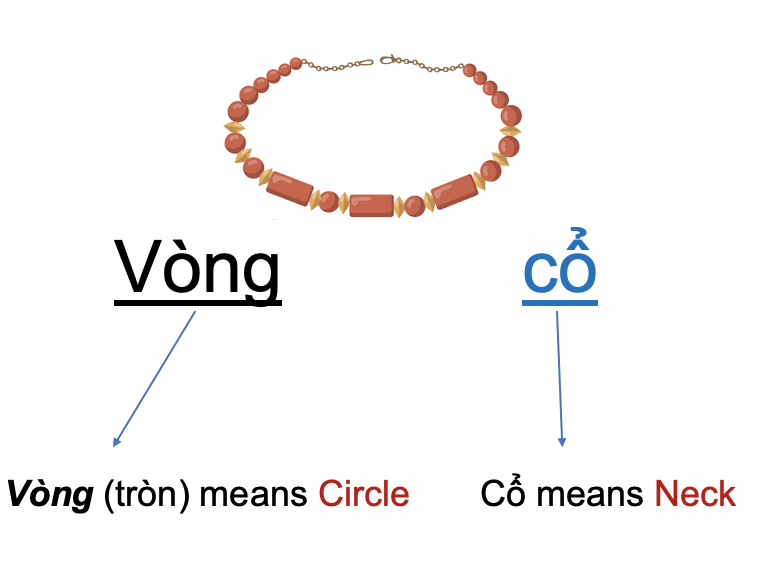
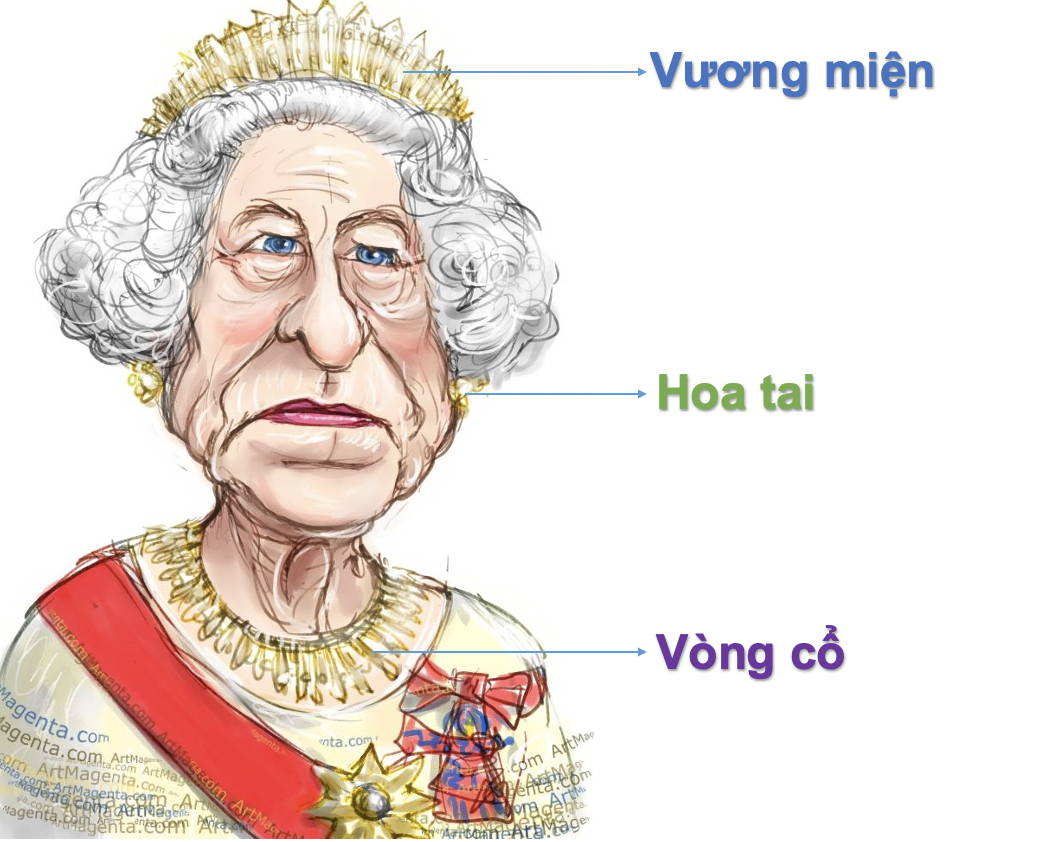
Note: If VÒNG TAY (BANGLE) is a circle jewelry worn on the wrist then VÒNG CỔ (NECKLACE) is a similarly shaped but worn on neck. Therefore, we can observe that Vietnamese is a logical and simple language to grasp.
Beside, we also apply DÂY CHUYỀN for NECKLACE (for common use in Vietnamese)
Bracelet :
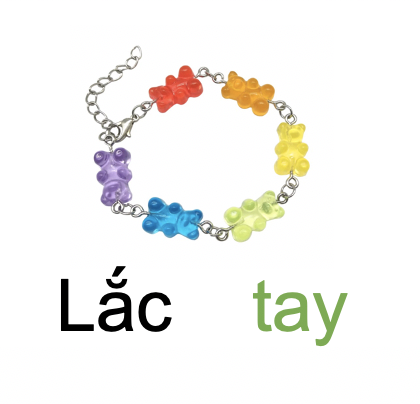
Aside from VÒNG ĐEO TAY (BANGLE), the Vietnamese have LẮC TAY (BRACELET), however many people confuse the two due to the slightly soft shape of the bracelet and the fact that it is worn on the wrist.
Earrings:
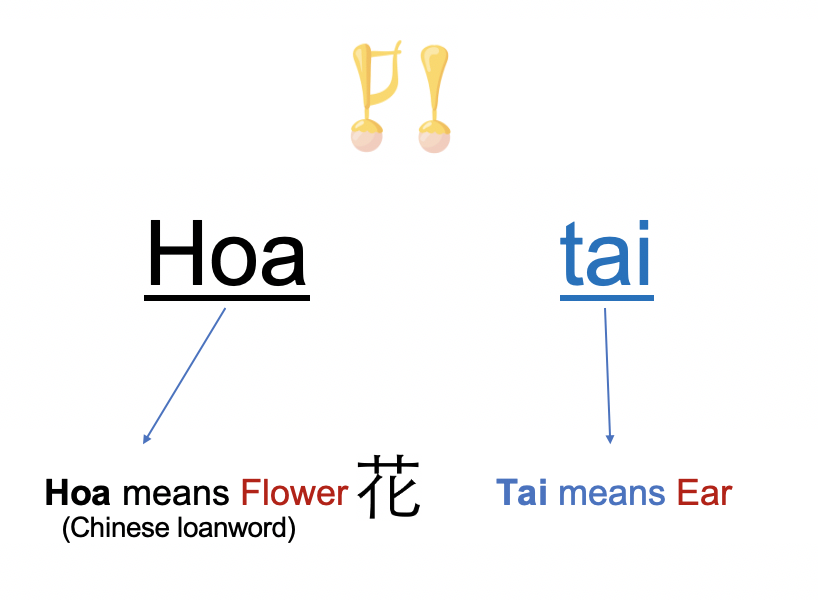
Beside, we also apply BÔNG TAI for EARRINGS (for common use in Vietnamese) since BÔNG is synonym of HOA.
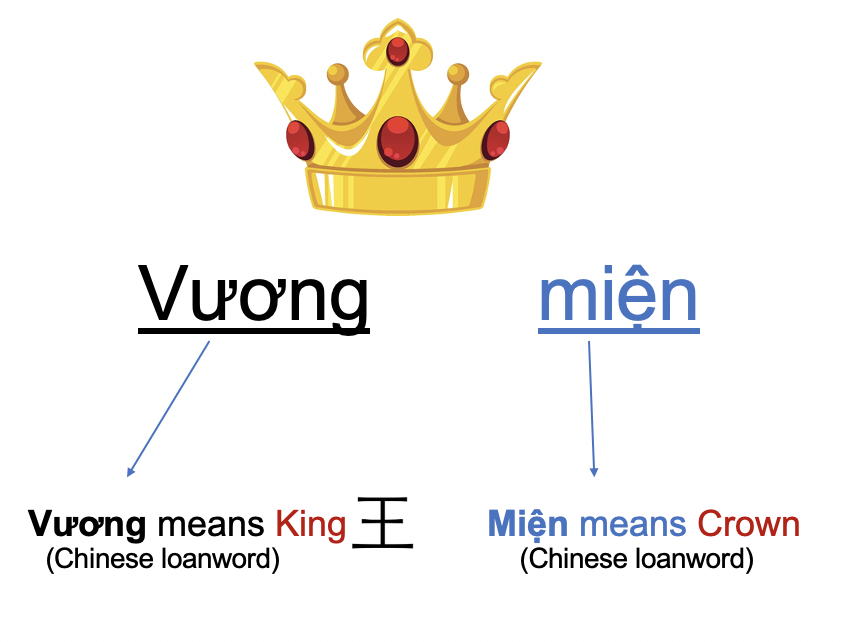
Crown:
We also have a Vietnamese word that is entirely derived from Chinese.
Ring and Brooch:
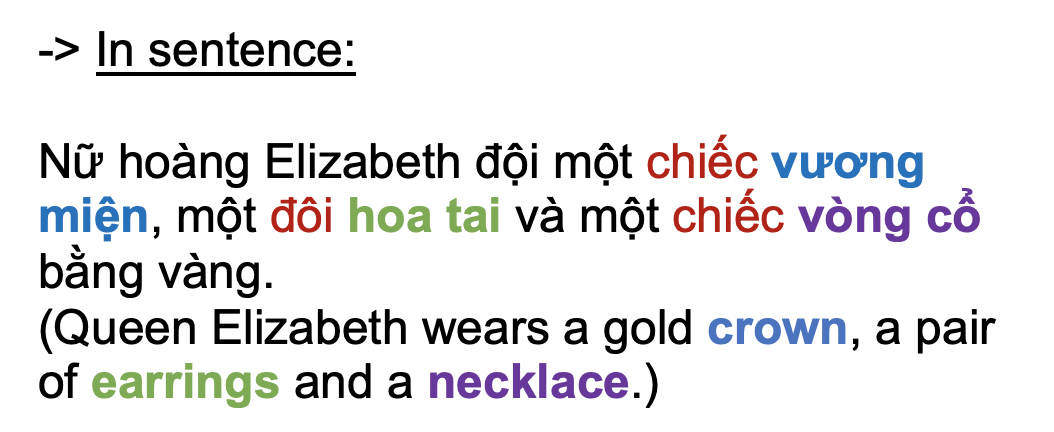
HOW TO APPLY THESE OBJECTS IN SENTENCE:
**NOTE:
Please note that CHIẾC is the classifier for all Accessories (Singular) and ĐÔI as Classifier if they are to be worn together.
Check this link for more details of Classifier.

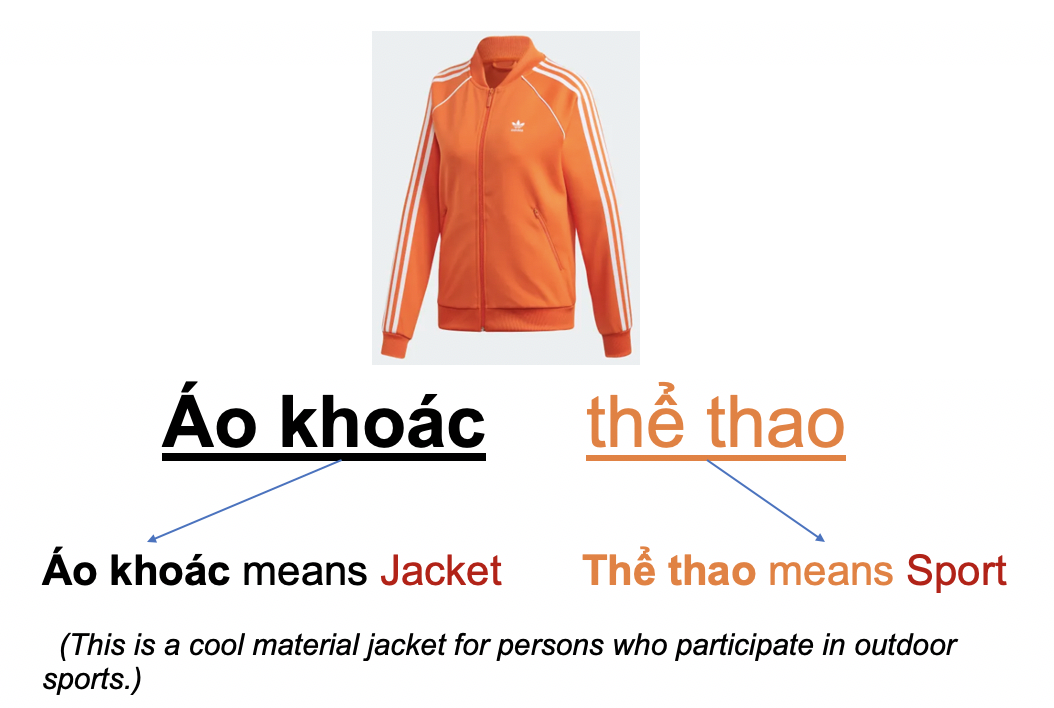
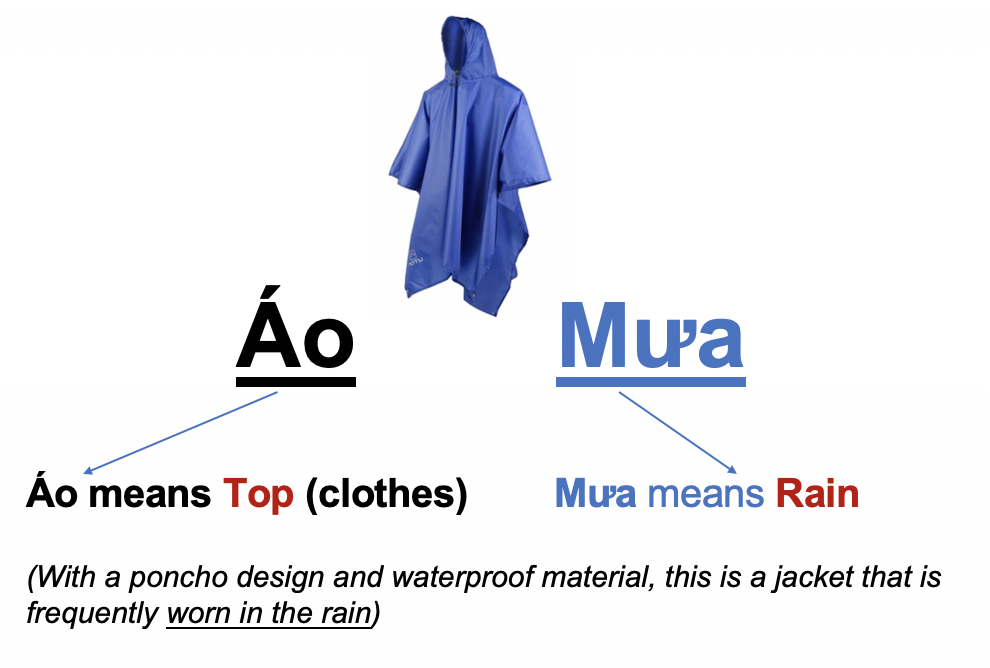
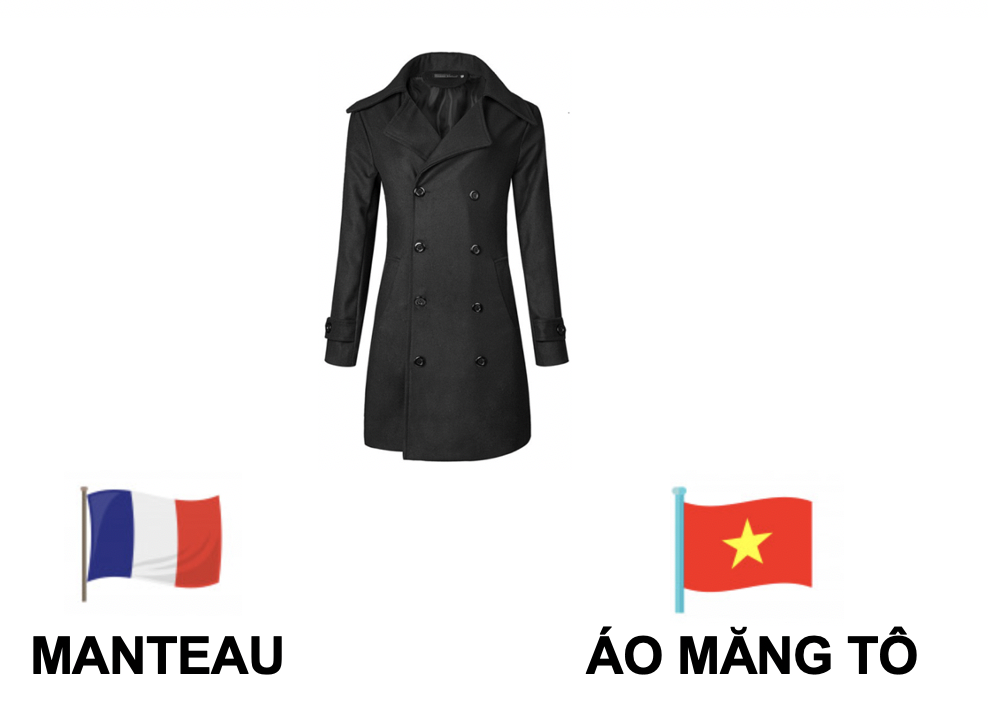
In Vietnamese, ÁO means TOP for clothing and ÁO KHOÁC is being used as outer wear. ÁO KHOÁC (Vietnamese jackets) come in a variety of styles, with the fabric of the jackets being the most important distinguishing factor.
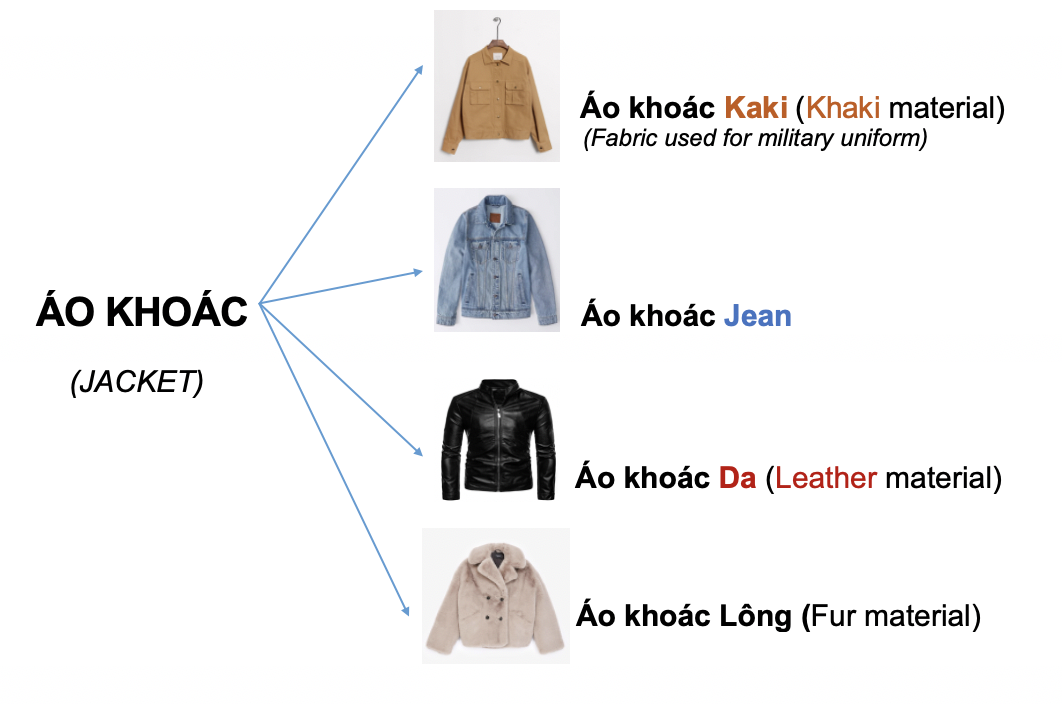
ÁO KHOÁC (Jackets) are also classified according to their intended use (occasions)
Casual Jacket:
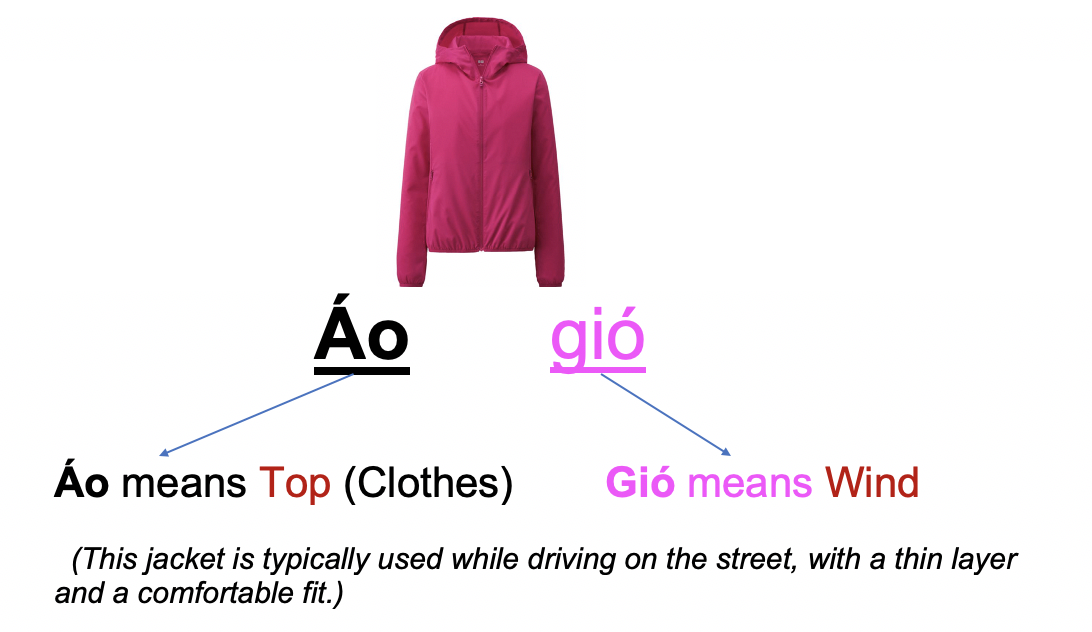
Sport Jacket:
Winter Jacket:
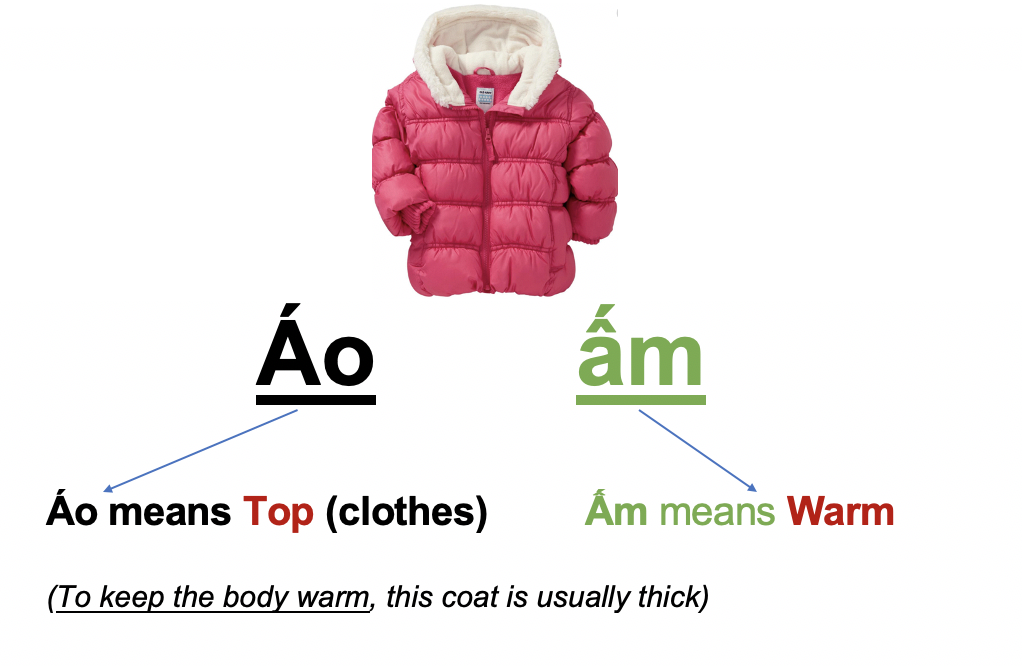
*NOTE: With a tropical climate, the weather is hot all year round, so in Vietnam, jackets that keep heat are not common, except for some northern provinces.
Raincoat (Poncho)
Some coat names are also taken from other countries (typically French and English here).
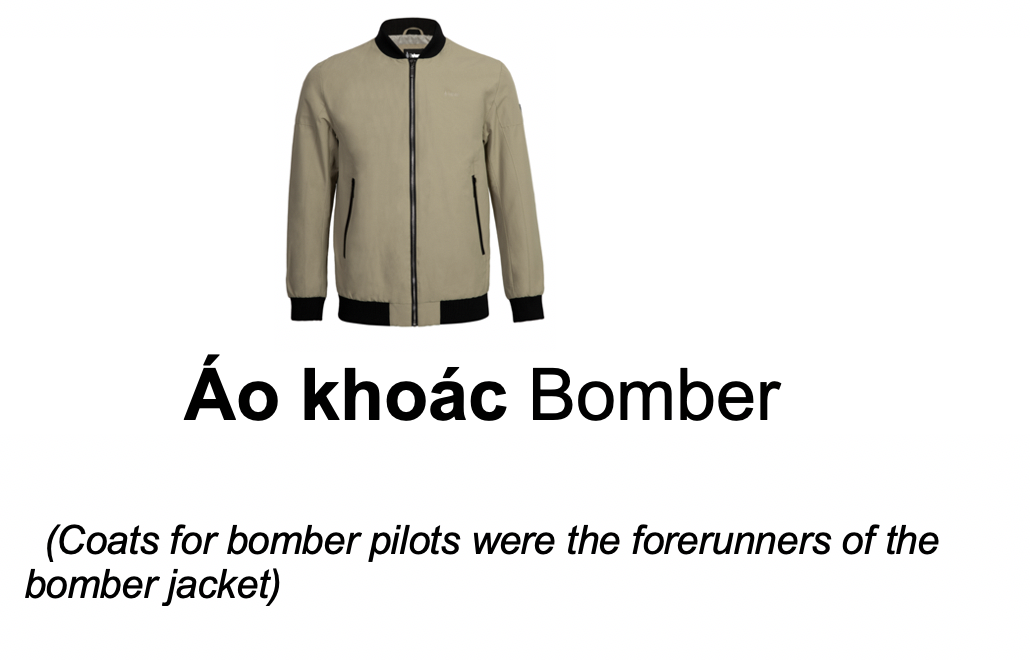
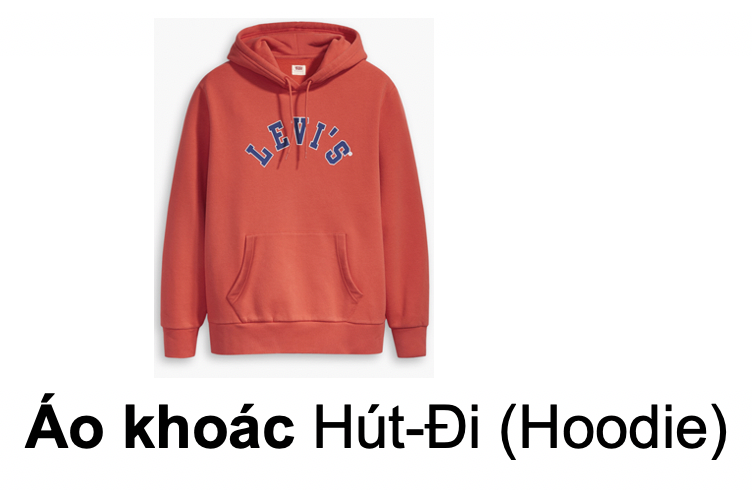
HOW TO APPLY THESE OBJECTS IN SENTENCE:
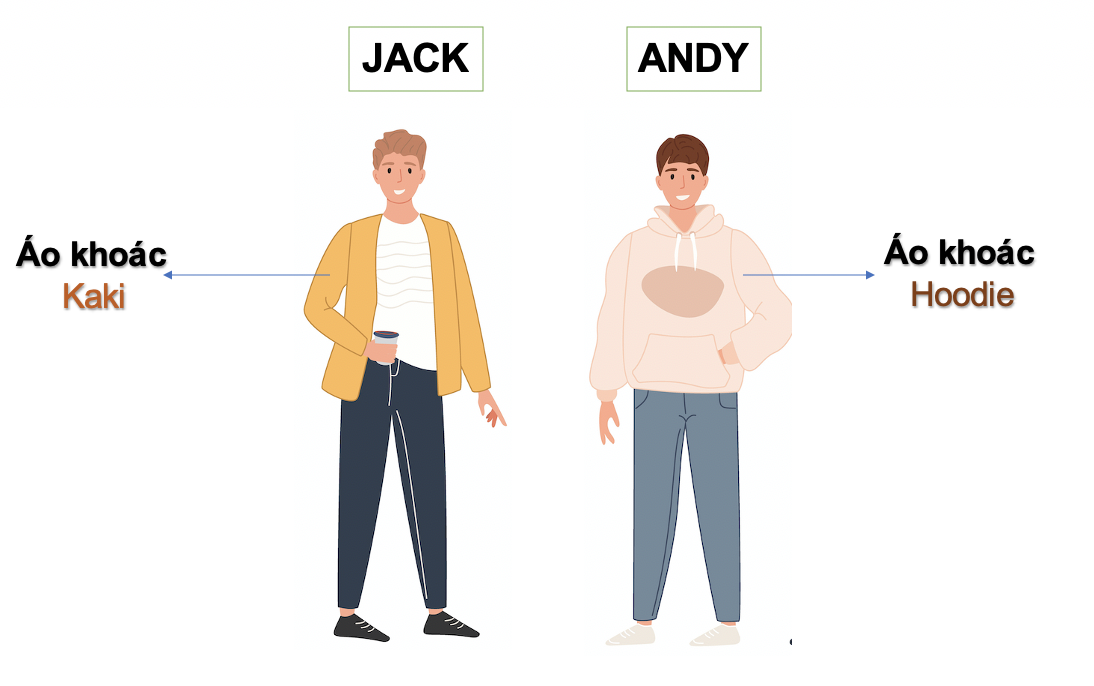
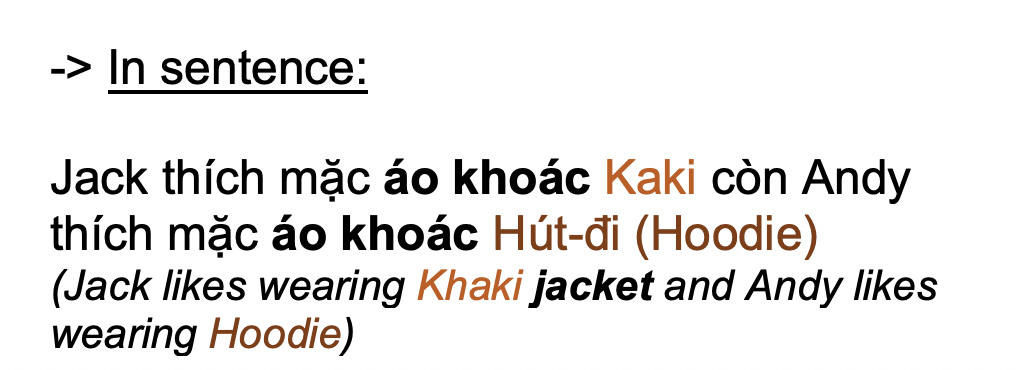
*NOTE: CÒN means AND to connect sentence and sentence.

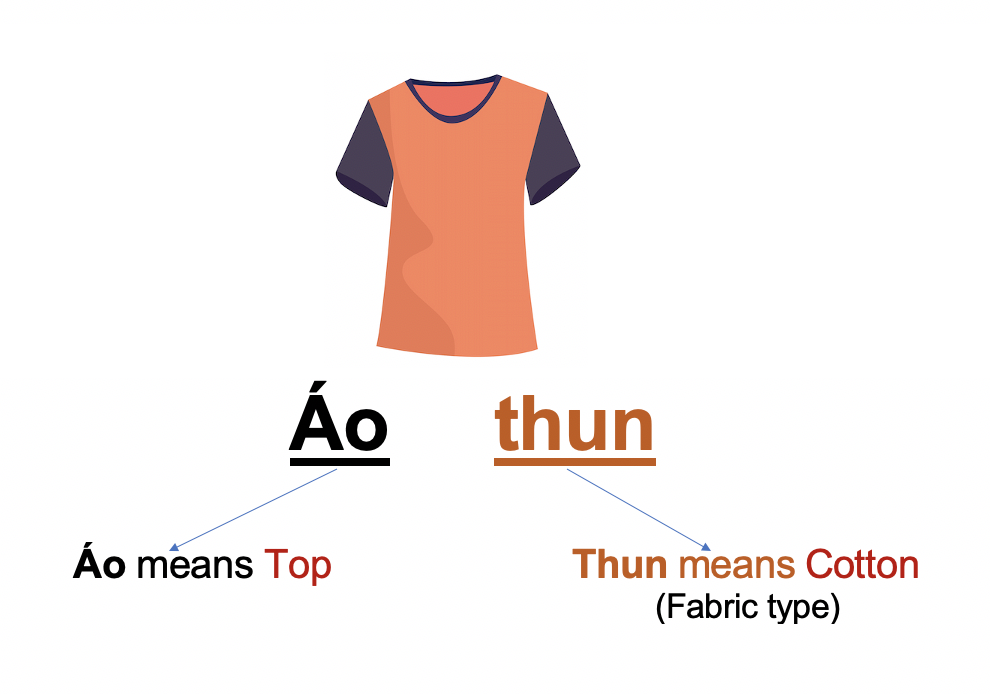
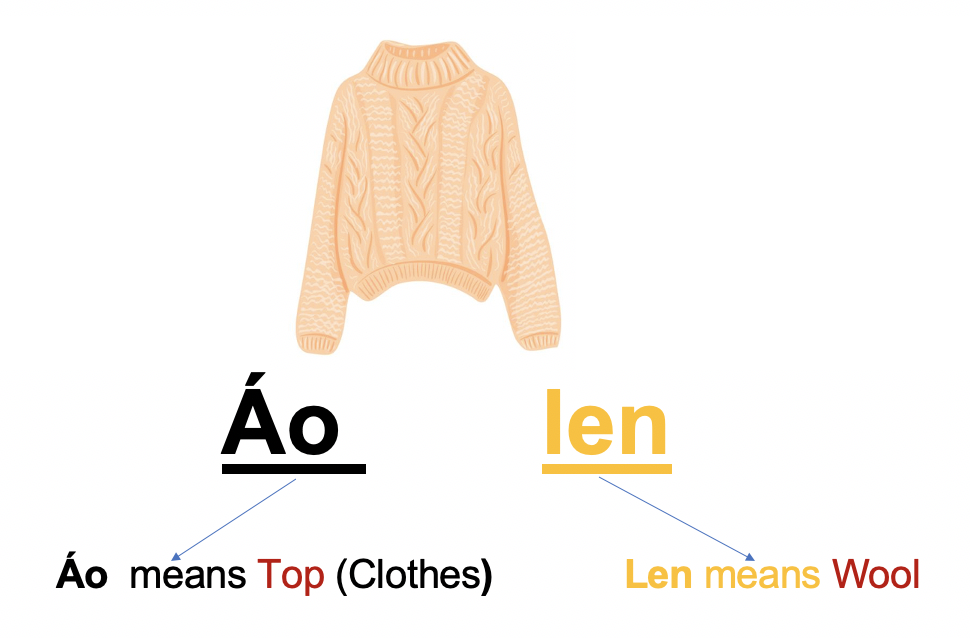
Shirts all begin with the ÁO , and their names vary depending on the fabric and shape of the shirt.
Sort by fabric type:
T-shirt:
Sweater:
Sort by shape:
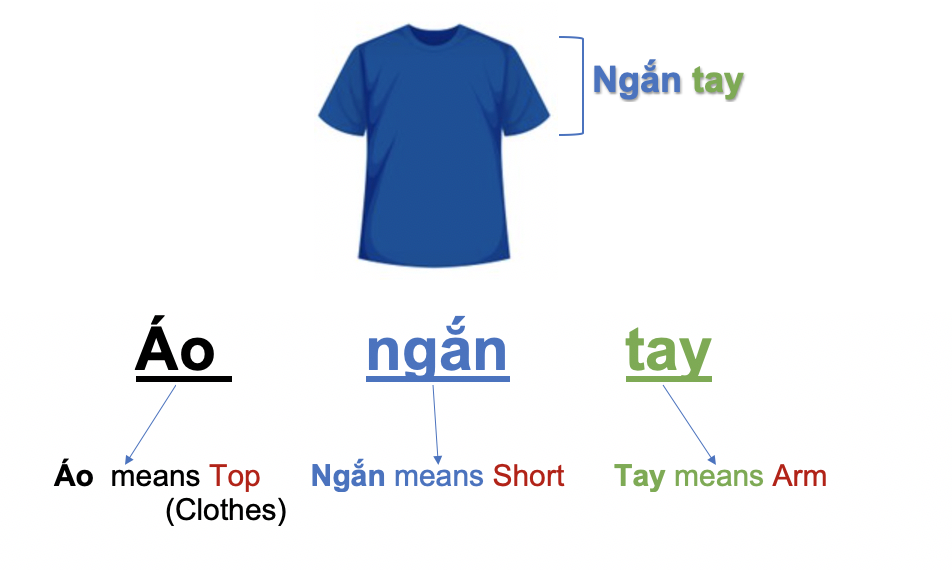
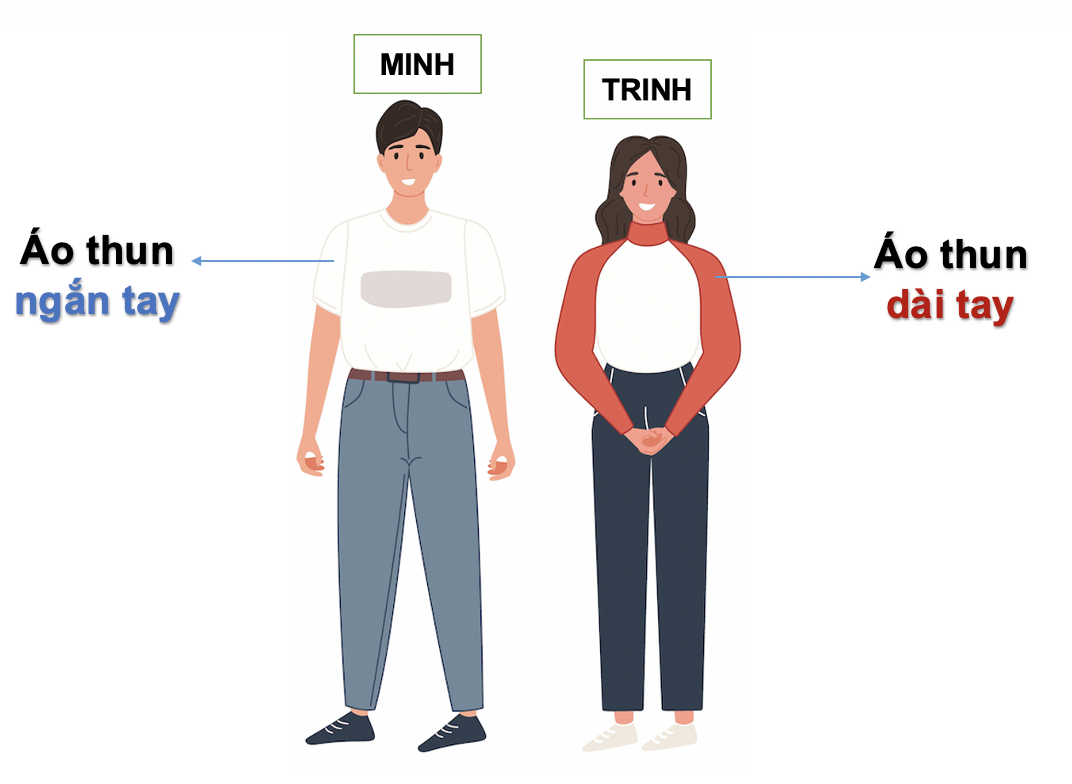
Short sleeves Shirt:
(Short sleeves mean NGẮN TAY which can be reused for all type of Shirts)
Long sleeves Shirt:
(Long sleeves mean DÀI TAY which can be reused for another type of Shirts)
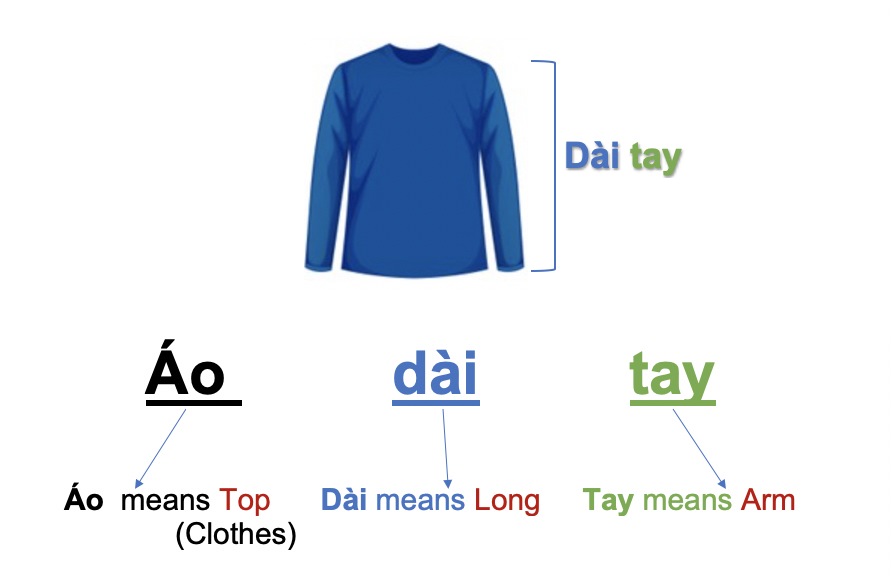
*NOTE: Please keep in mind that TAY can refer to any bodily component relating to the ARM, WRIST, or HANDS.
Tanktop:
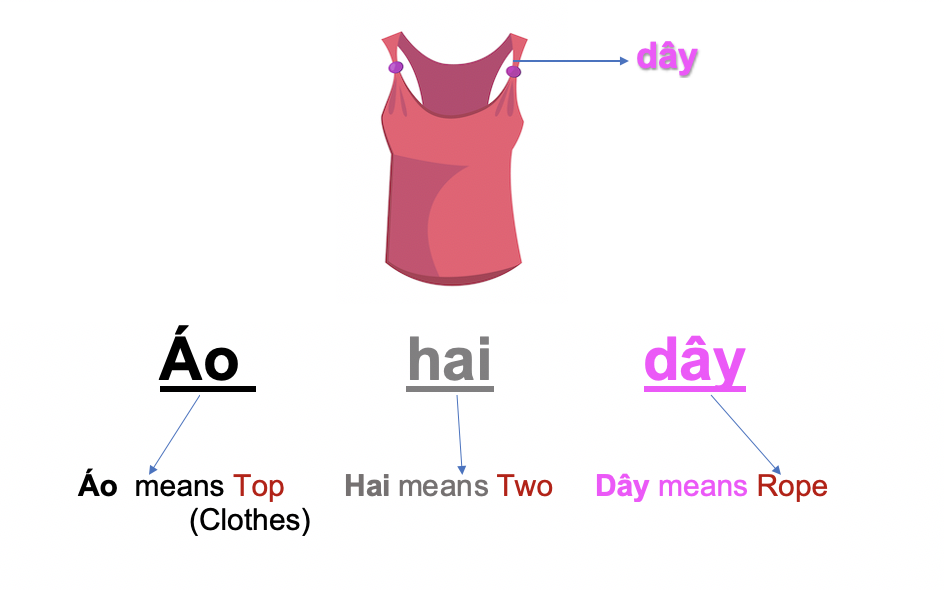
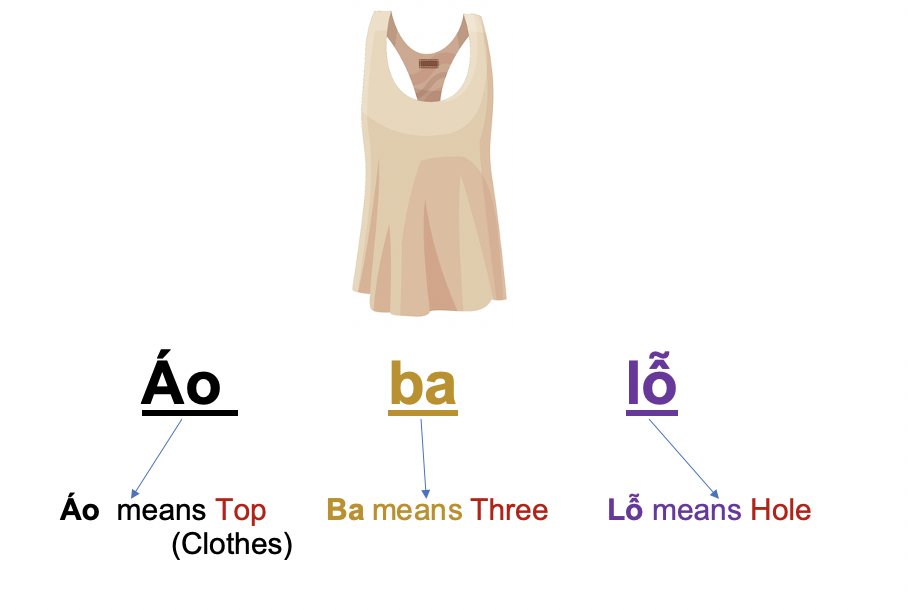
*NOTE: In English, they’re both tanktops. There isn’t much of a difference between these two styles of shirts.
Áo dài – Vietnamese Traditional dress
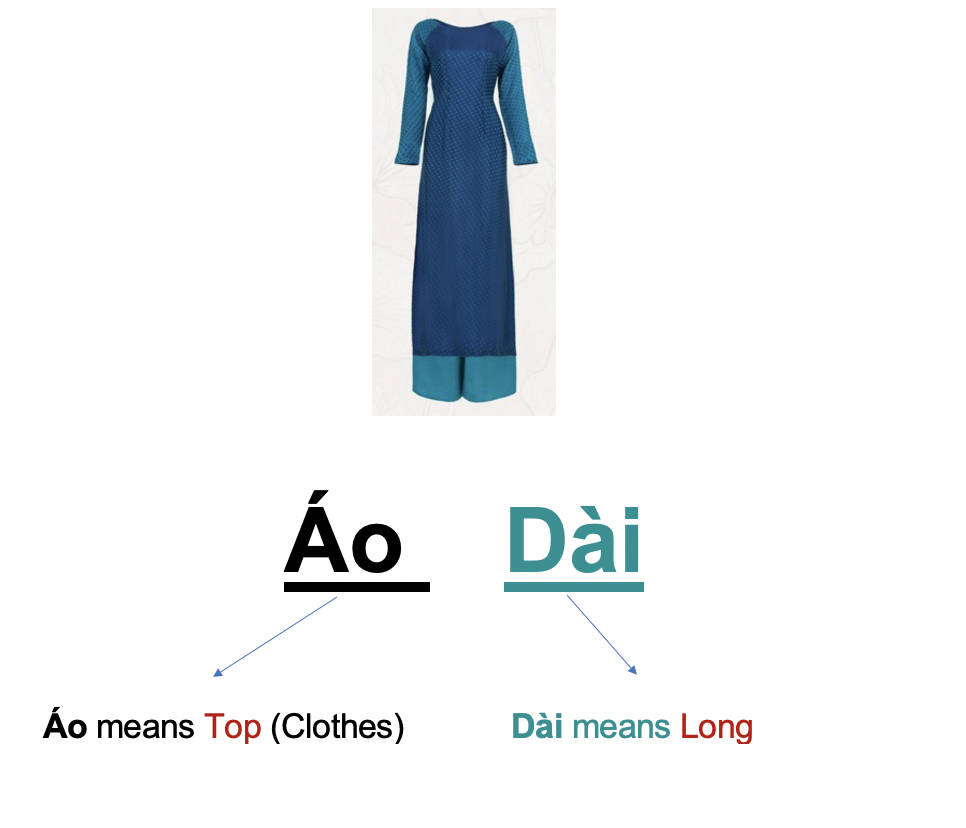
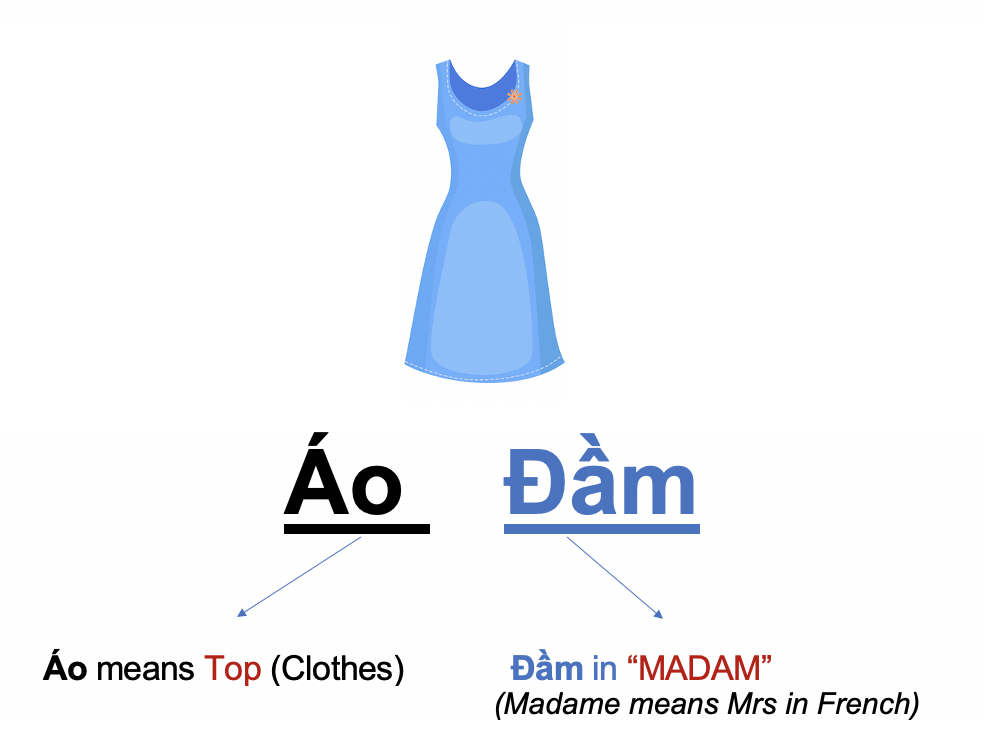
The shirt is derived from a foreign language: -Dress:
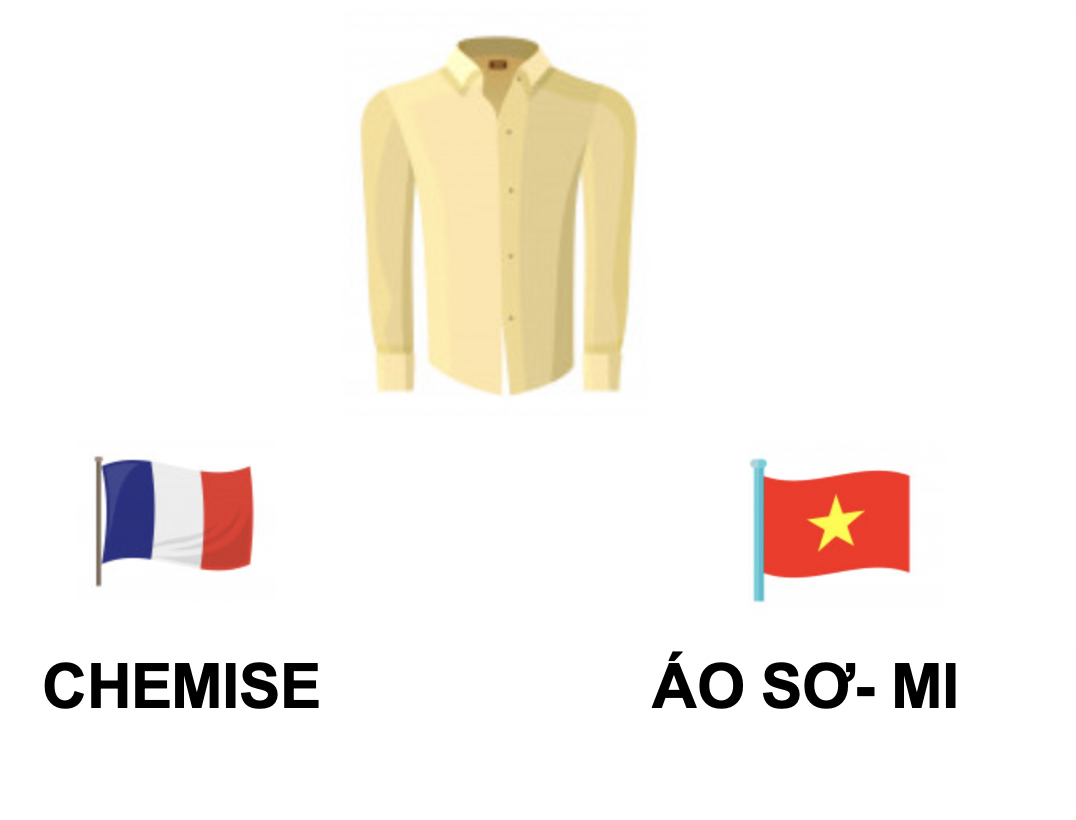
Shirt:
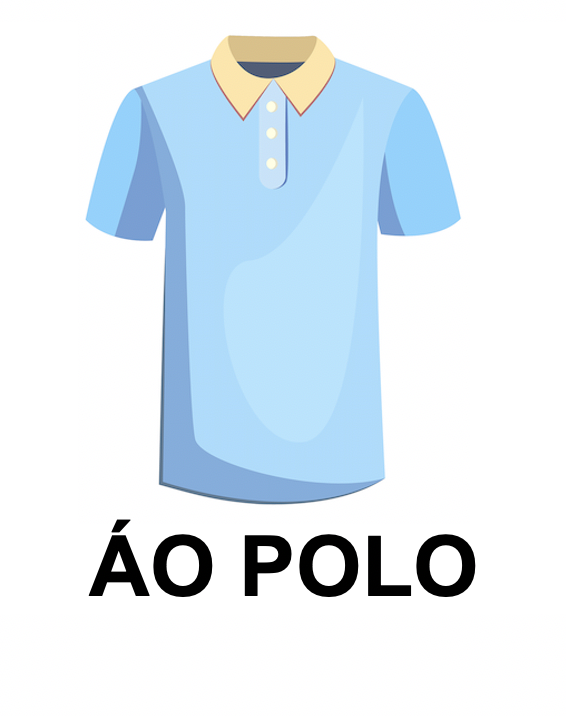
Polo shirt:
HOW TO APPLY THESE OBJECTS IN SENTENCE:
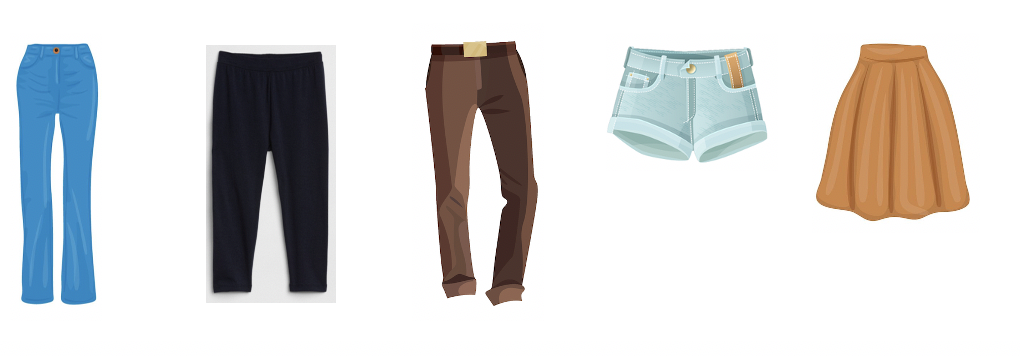
Same as it is for ÁO – tops, QUẦN is used for any bottoms (clothes) having two pieces.
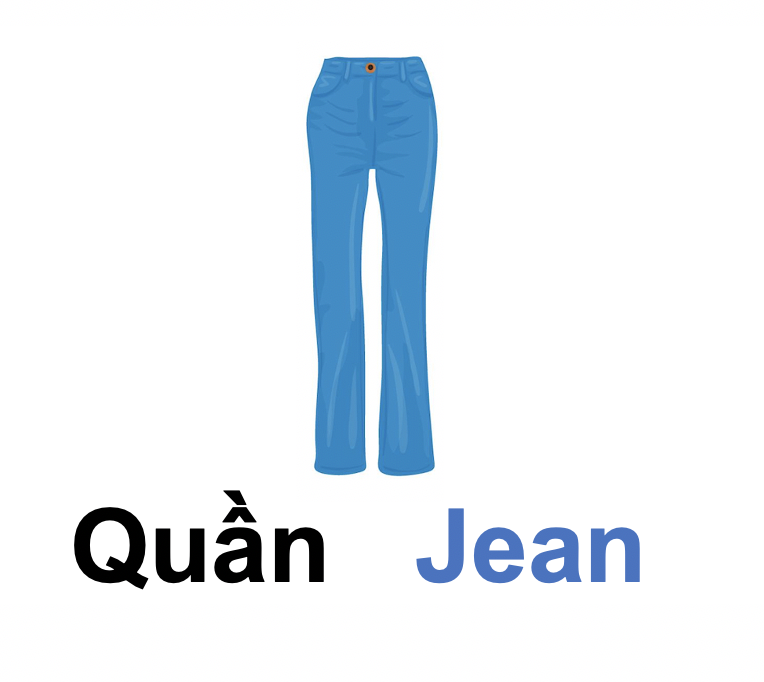
Jeans:
Sweatpants:
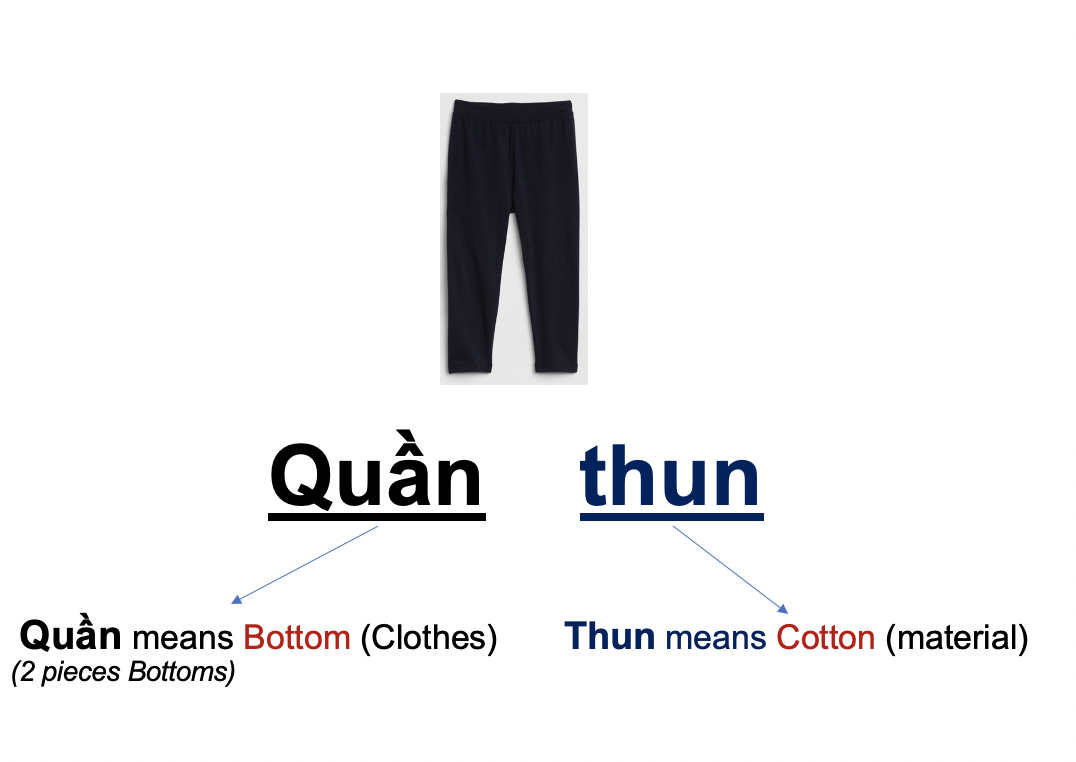
Trousers:
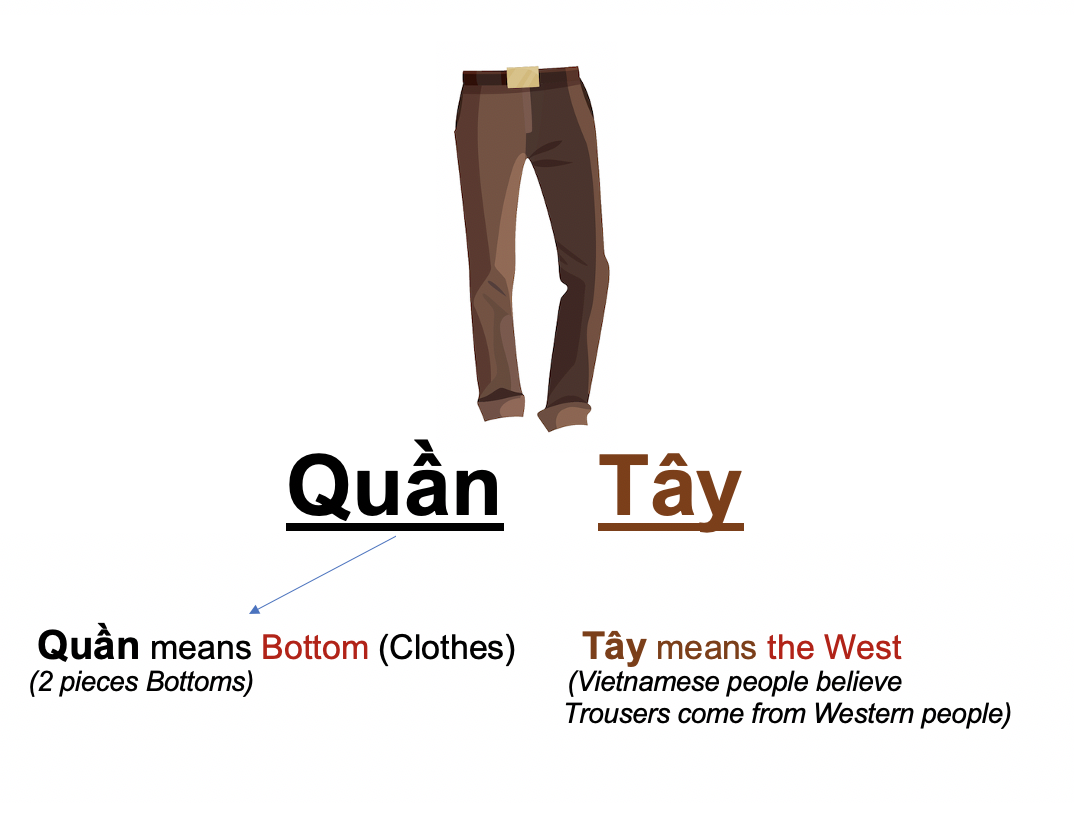
Shorts:
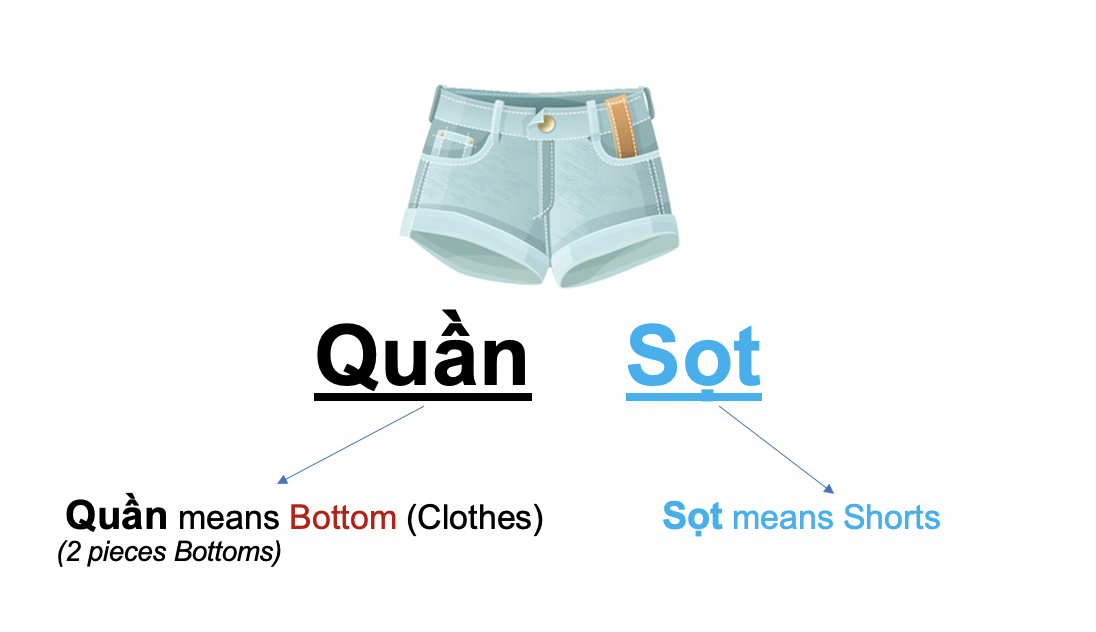
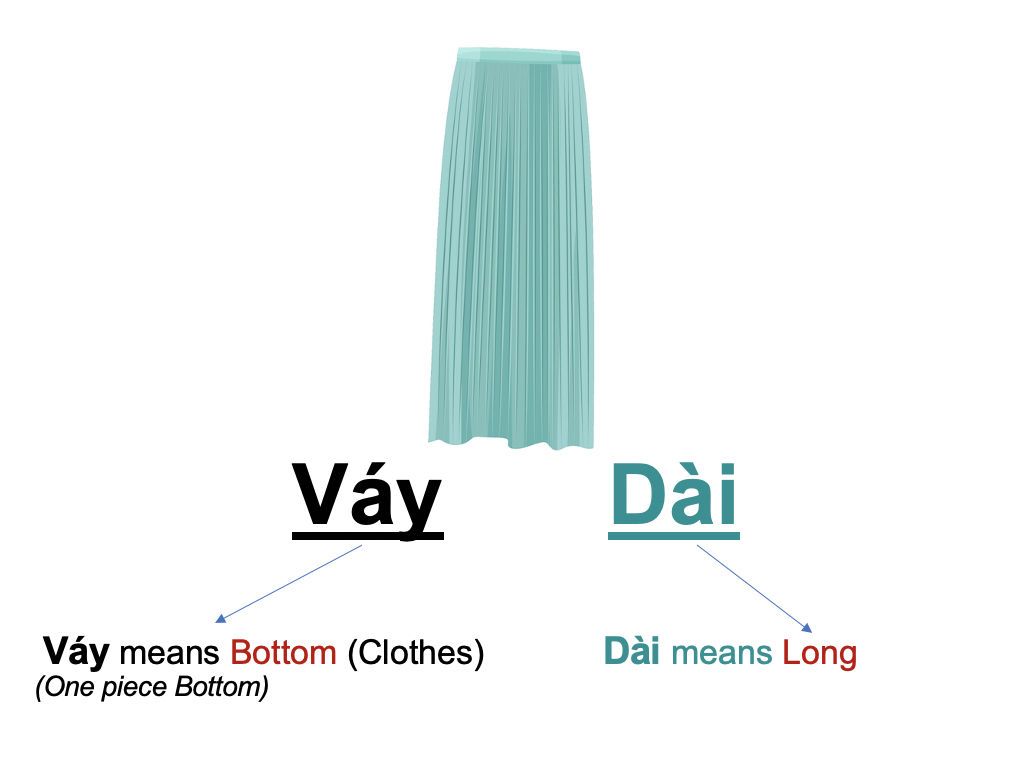
Aside from QUẦN , we also have VÁY as a bottom, but with one piece.
Short skirt:
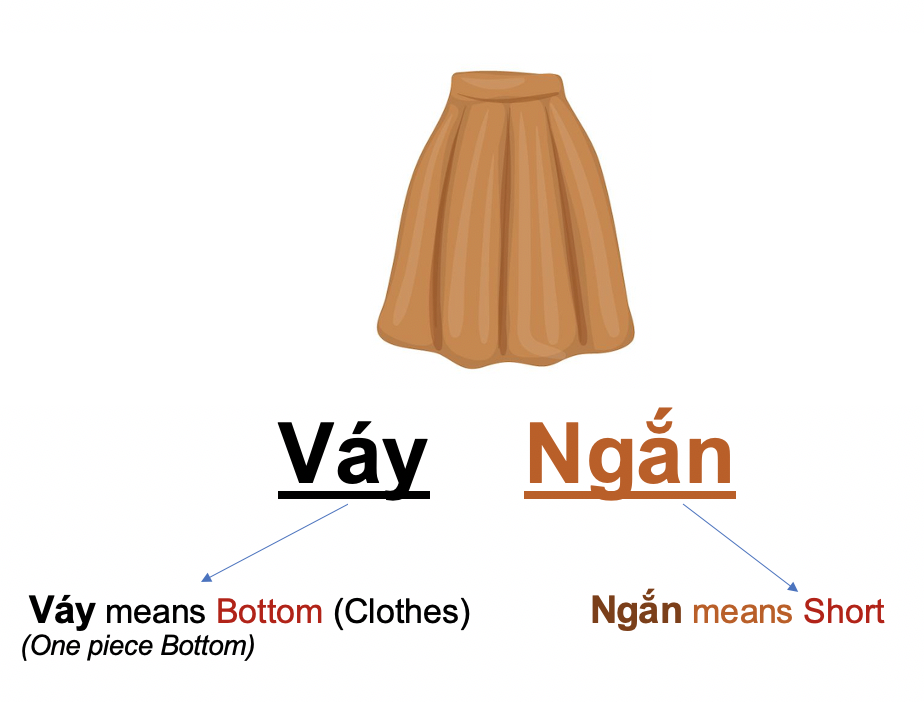
Long skirt:
HOW TO APPLY THESE OBJECTS IN SENTENCE:
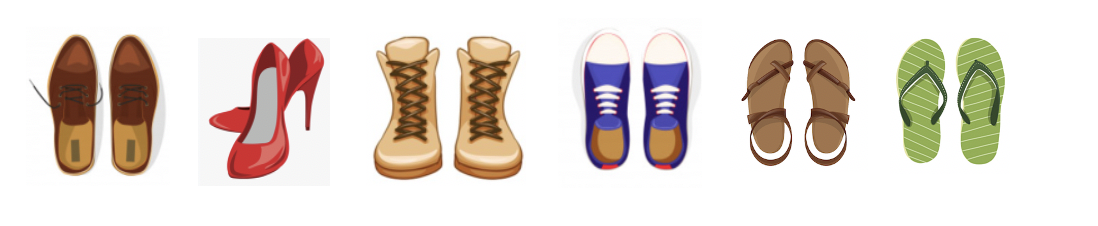
In Vietnam, there are two basic forms of footwear: shoes (with back straps) and flip-flop (without rear straps).
Giày (Shoes) – with back straps:
Working shoes:
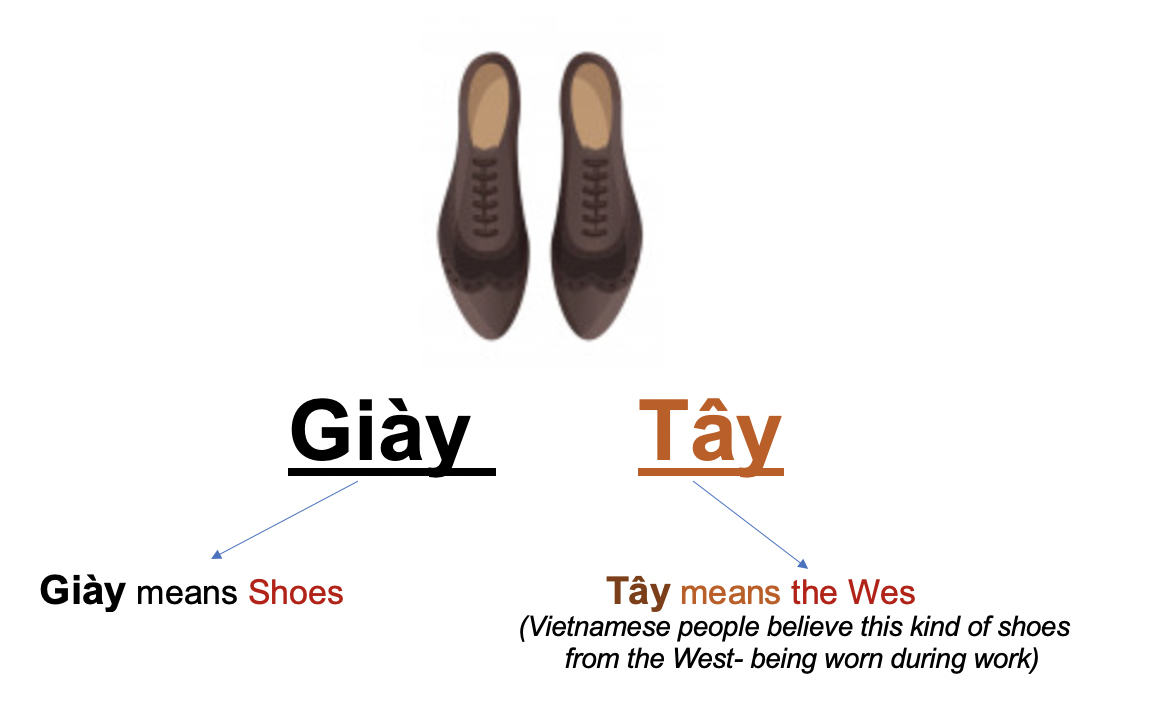
High heels:
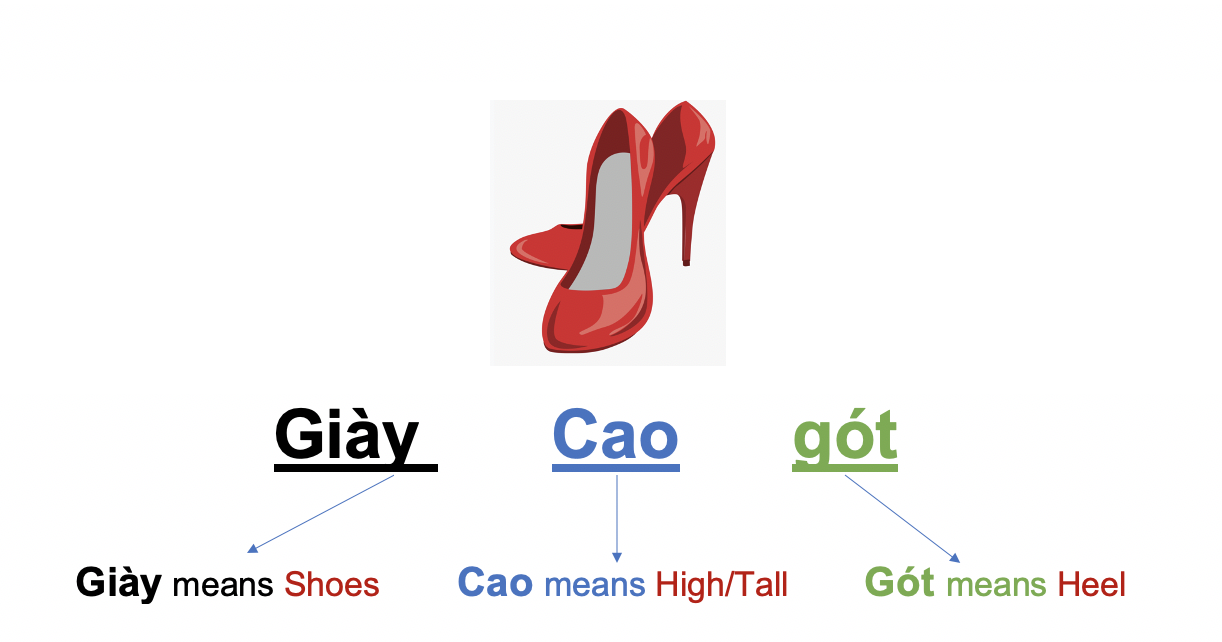
Boots:
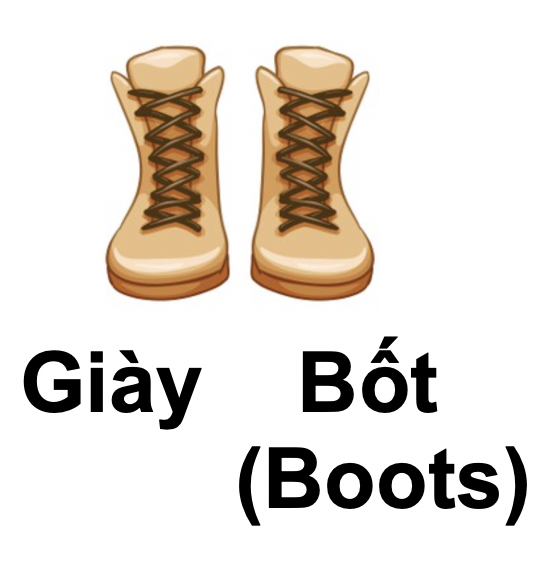
Sneakers:
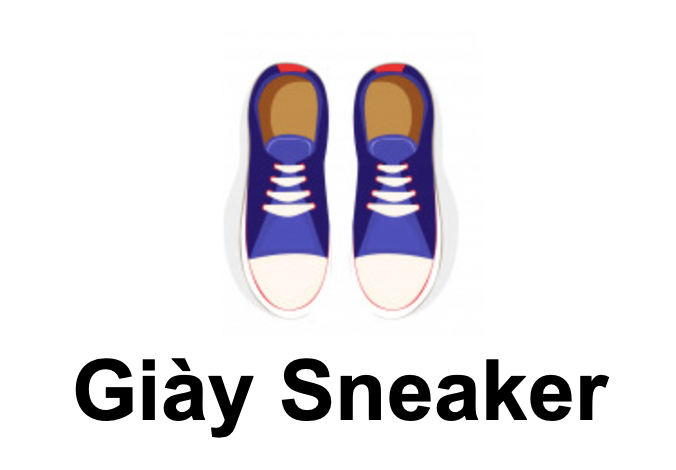
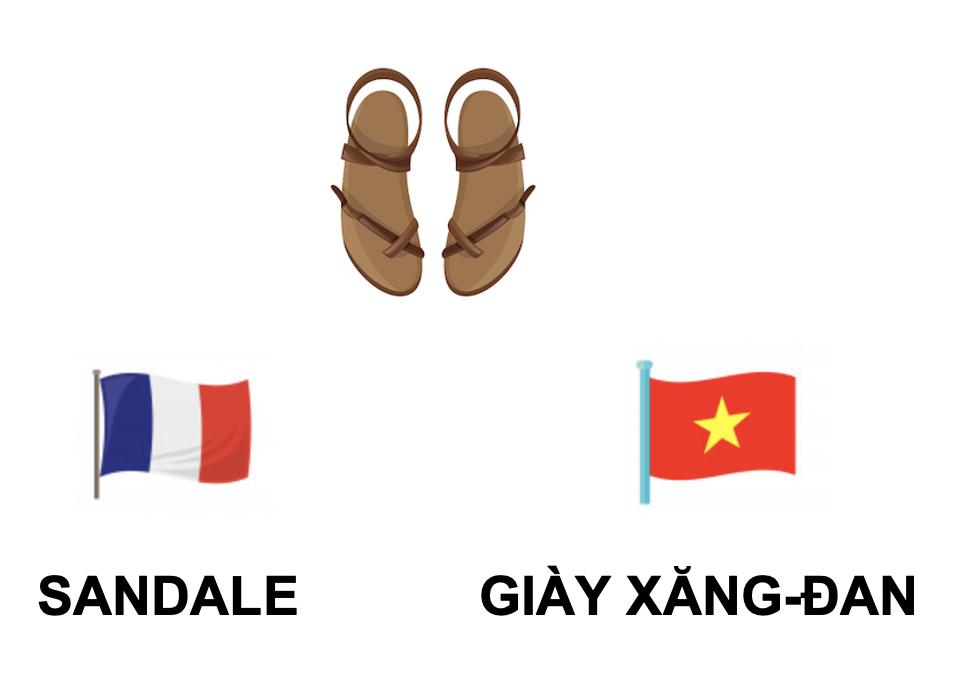
Sandals:
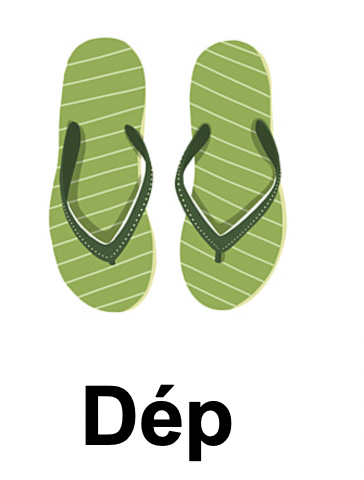
Flip-flop (without rear straps):
Casual Flip-flops:
Slippers:
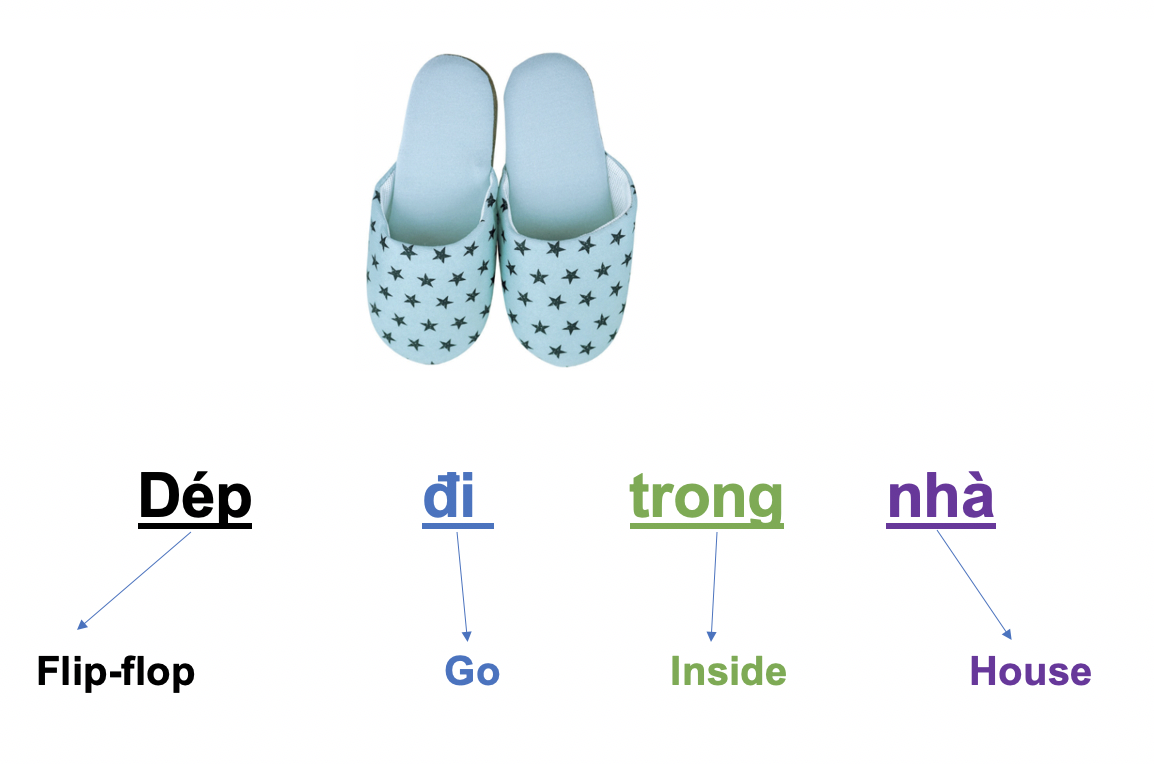
Bathroom Slippers:
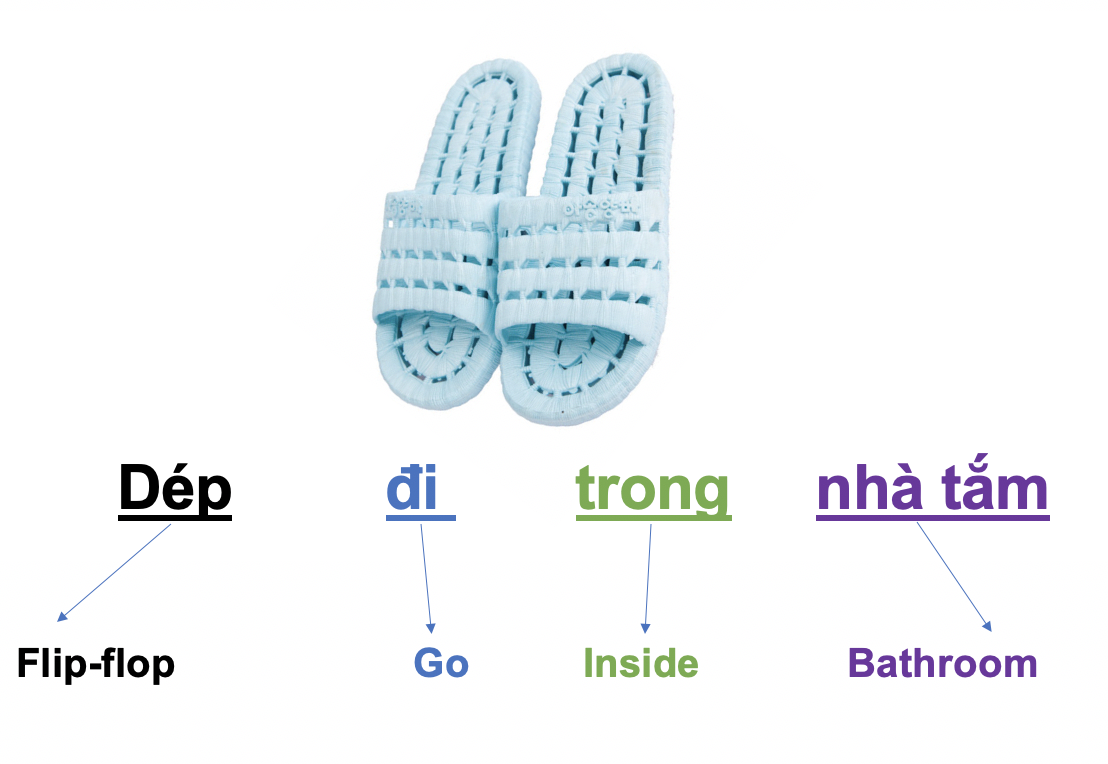
HOW TO APPLY THESE OBJECTS IN SENTENCE:
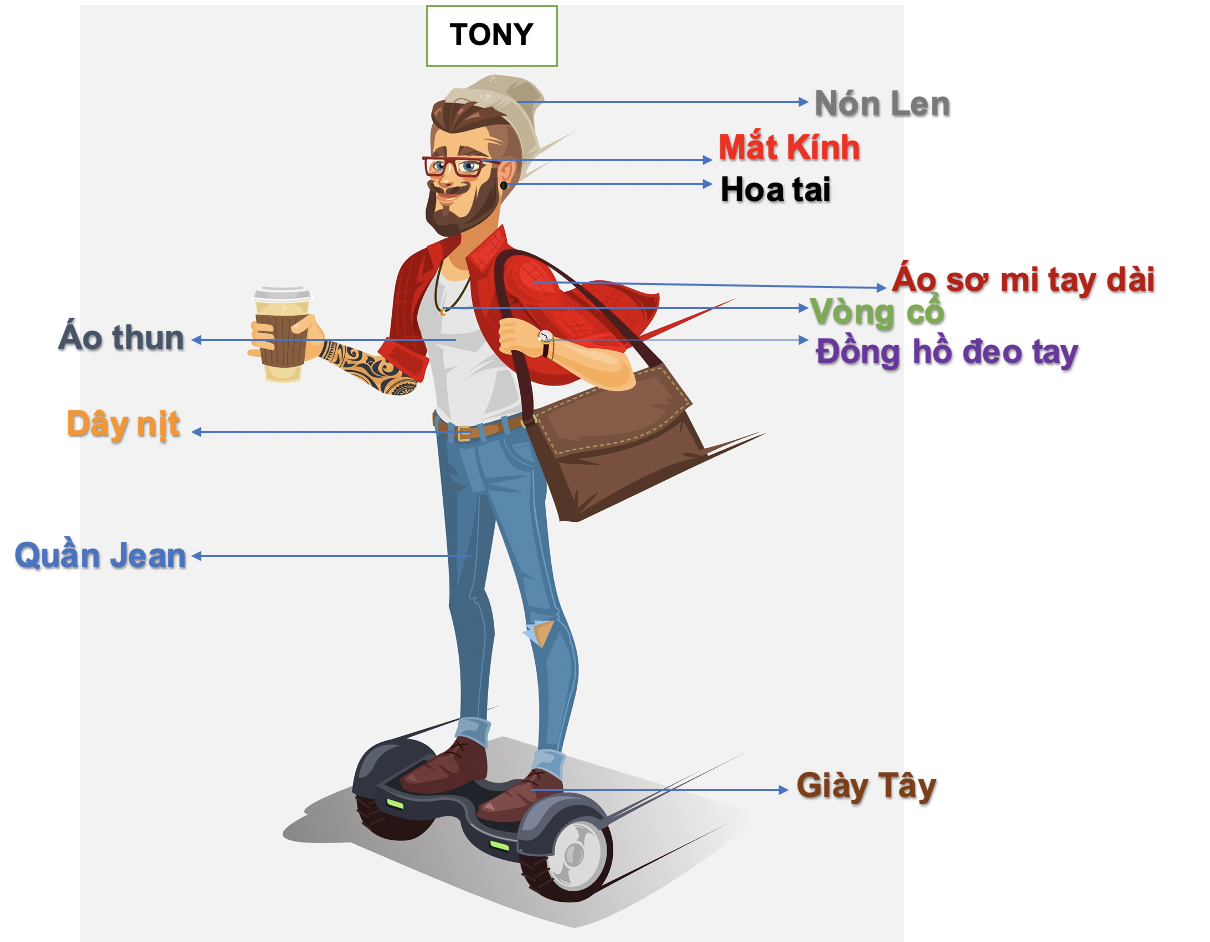
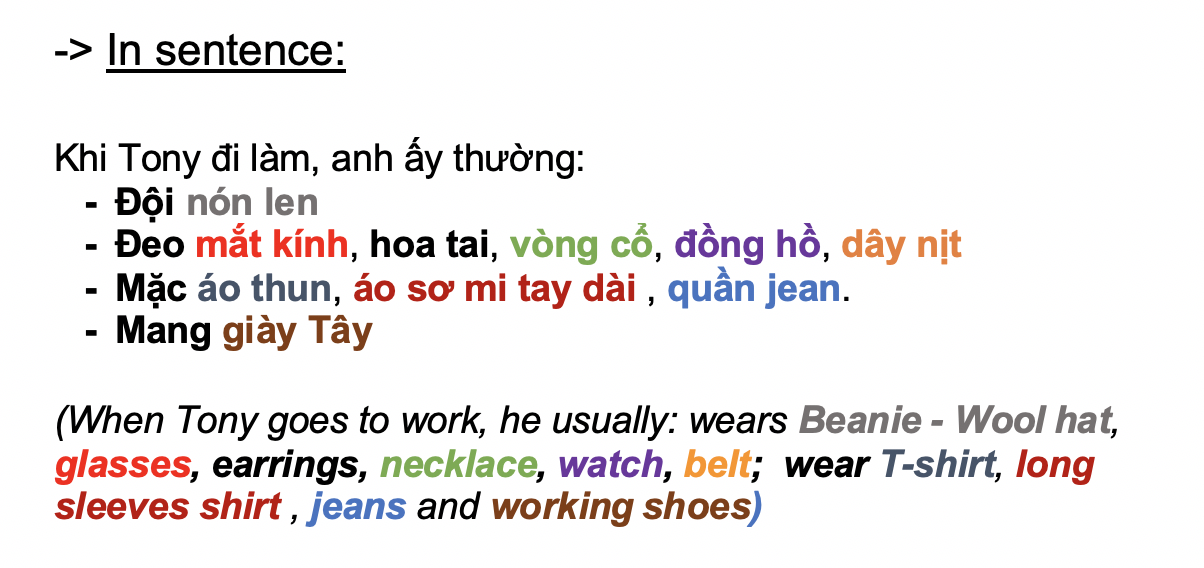
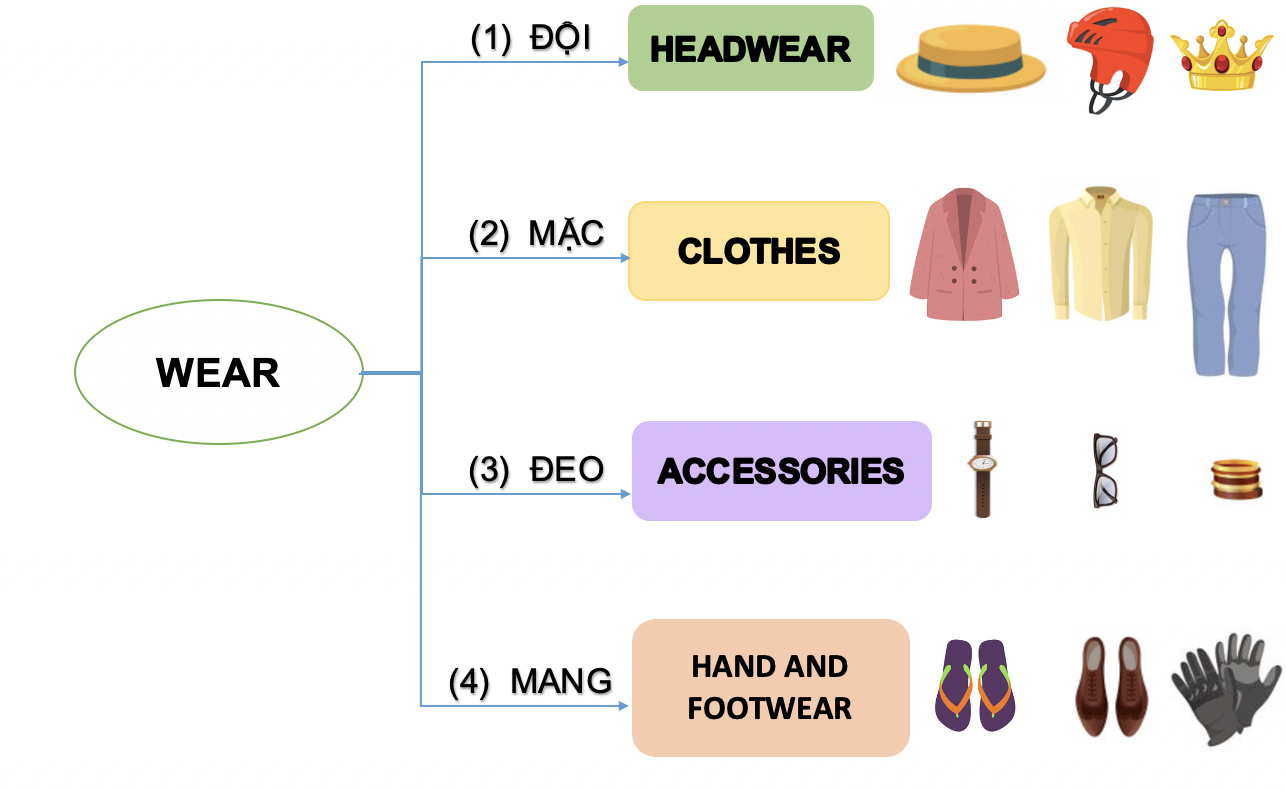
As mentioned above, wear in Vietnamese has many different words:
Exercises: (Please find the answer at the bottom of this post)
1. Find Bryan?
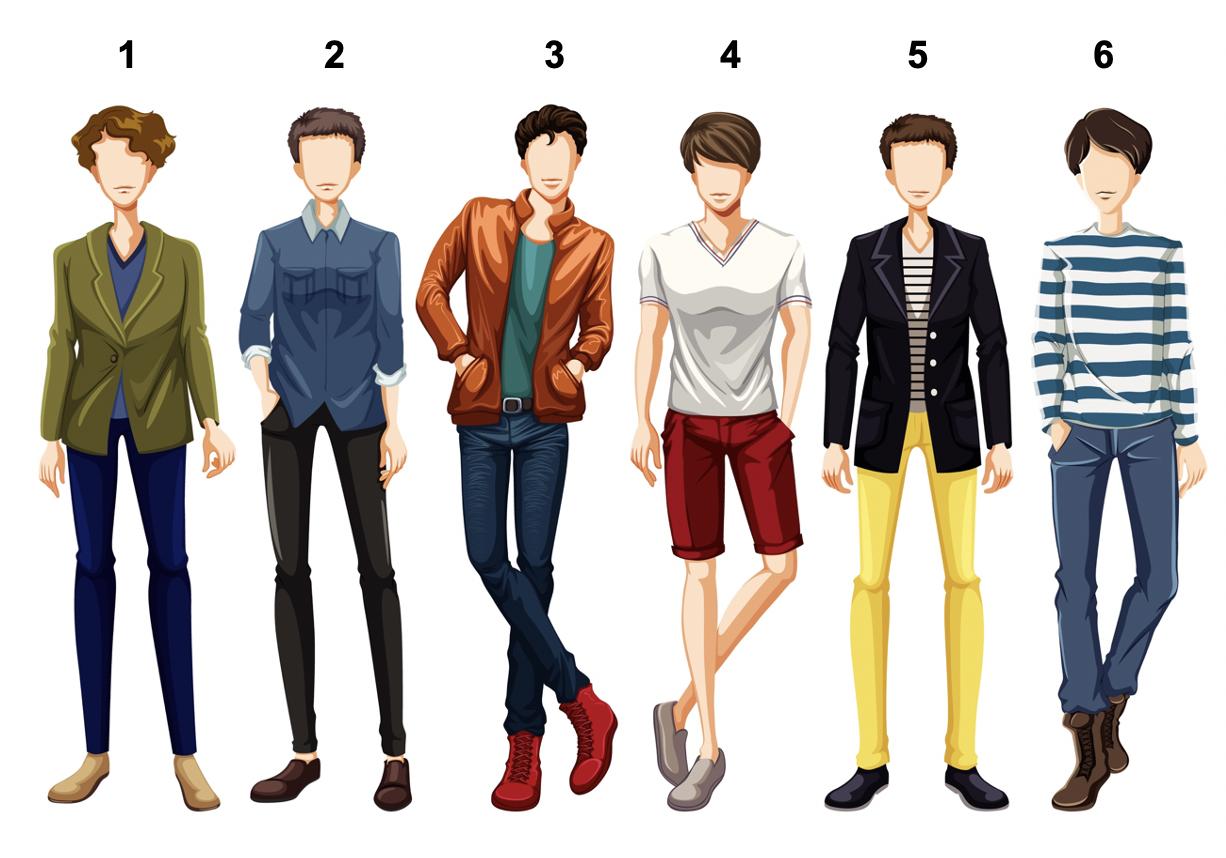
Ryan mặc áo thun ngắn tay màu trắng, quần sọt màu đỏ và mang đôi giày sneaker màu xám.
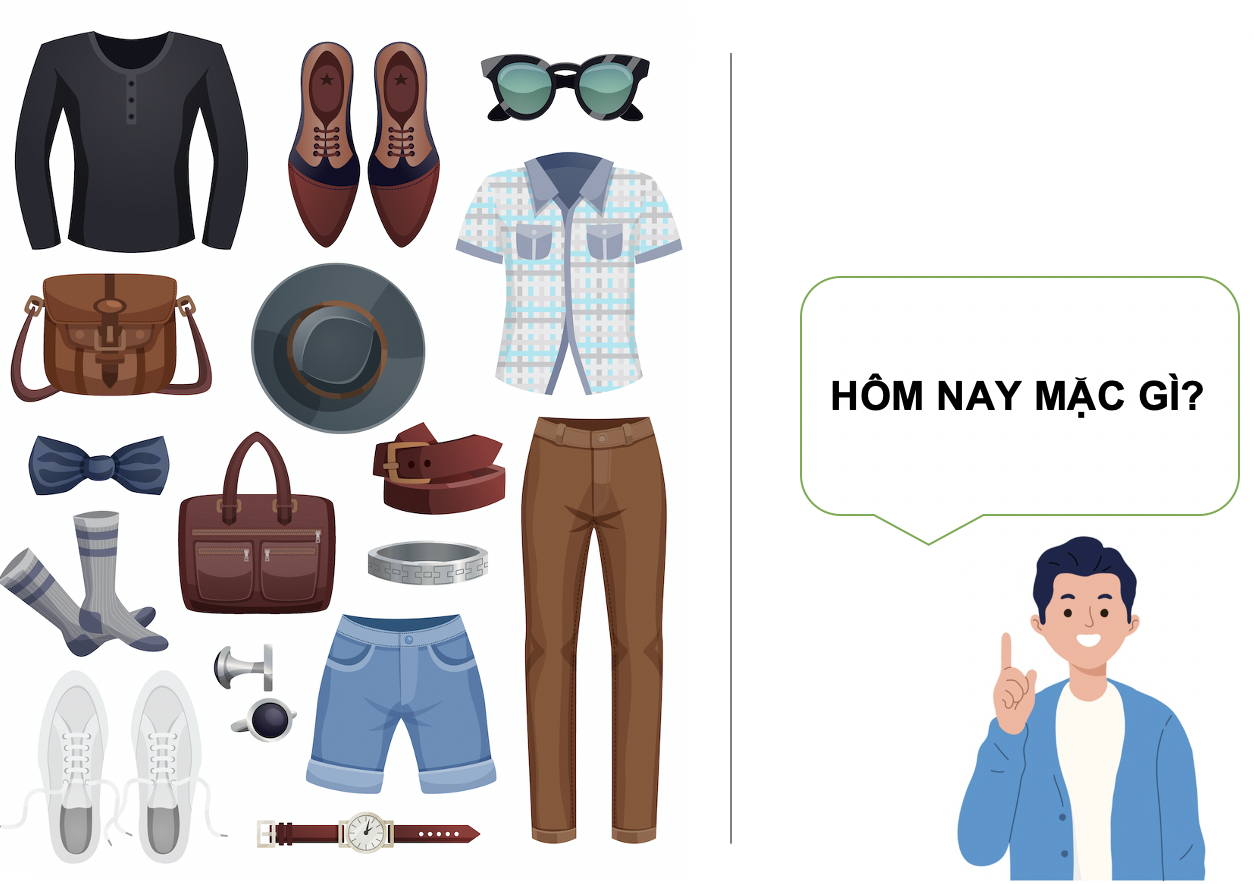
2. What will he wear today?
Answer:
- Ryan is the guy number 4
- Today, he will wear a black long sleeves T-shirt , shorts Jean, socks, white shoes with brown belt, brown watch and a black sunglasses.